
Updated
On this page
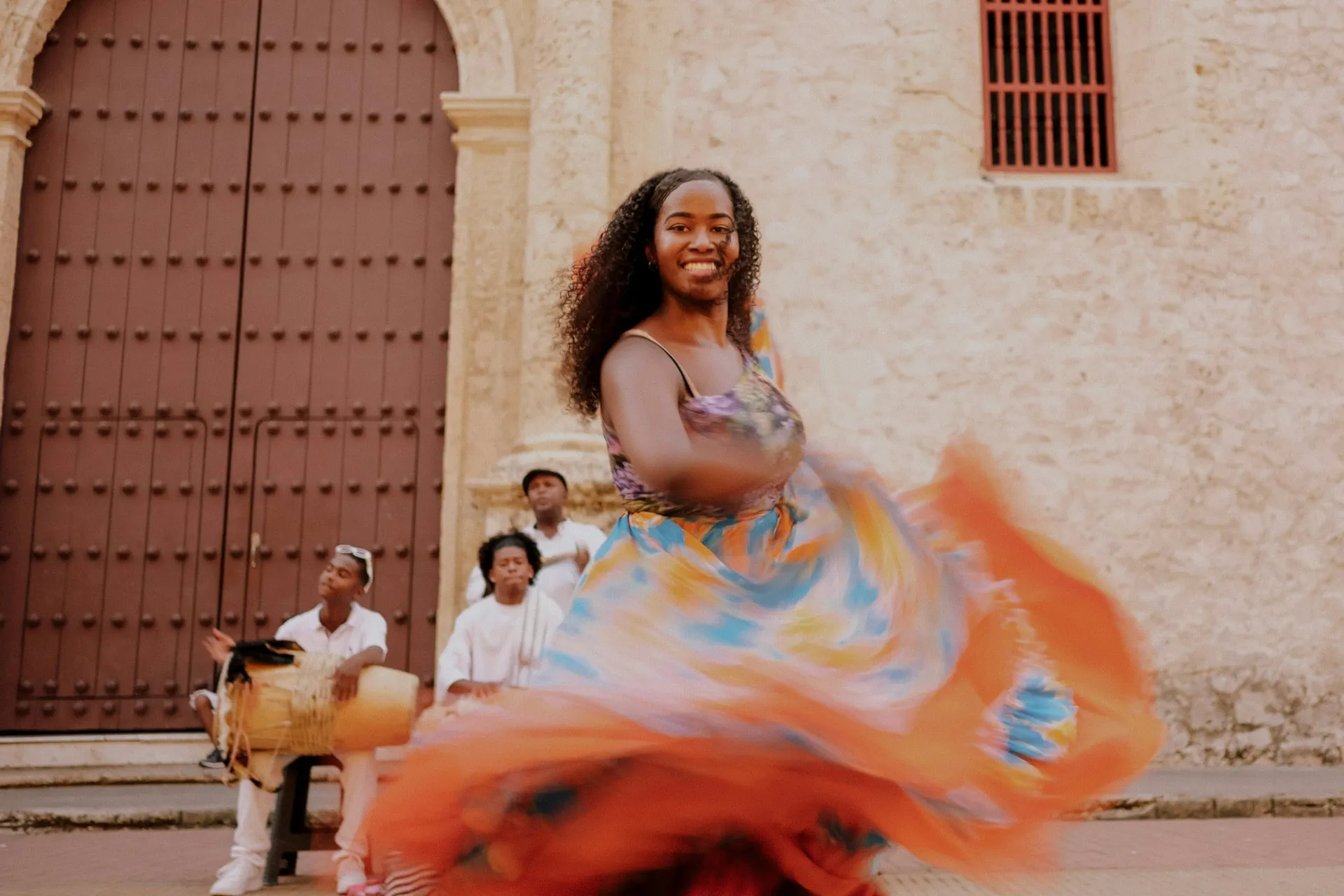
In Colombia, dance isn’t a performance you watch from a seat. It’s something the whole country does. Music spills out of corner shops, buses, fruit carts, and family kitchens, and people of every age move to it without a second thought. A wedding, a birthday, a Sunday afternoon: all of them end with furniture pushed aside and someone insisting you join in. For a visitor, learning even a little of how Colombia moves is one of the fastest ways to stop feeling like an outsider.
What makes the country so rich for dancers is its geography. Each region grew its own sound from a different blend of Indigenous, African, and European roots: the fast, joyful salsa of the Andean southwest; the earthy cumbia and electric champeta of the Caribbean coast; the accordion-driven vallenato of the northern plains; and the marimba-led currulao of the Pacific. You could spend a month chasing rhythms across Colombia and never hear the same beat twice.
This guide walks through the dances region by region, where to take classes, the festivals worth planning a trip around, and how to step onto a crowded floor without feeling lost.
Salsa: Cali, the World’s Salsa Capital
If Colombia has a dance capital, it’s Cali. The city took the salsa that arrived from Cuba, Puerto Rico, and New York in the mid-20th century and made it its own: salsa caleña, defined by lightning-fast footwork and a relatively still upper body. Caleños grow up dancing it, and the standard on a local floor can be humbling and exhilarating in equal measure.
The legendary salsa clubs cluster in Juanchito, across the river east of the city, with more spread through Menga to the north and around El Peñón. These are nights worth planning: many are far from the center, so arrange a booked app ride or a club-recommended taxi both ways rather than walking late, the same advice we give in our guide to getting around Cali. The city’s calendar peaks at the Feria de Cali (December 25–30), a week of salsa marathons, concerts, and street parties.
Cali is also the easiest place in Colombia to learn: it’s full of academies offering drop-in group classes and private lessons, and many travelers take a few sessions before braving a club. Even one lesson changes how you hear the music.
Cumbia: Colombia’s Folkloric Heartbeat
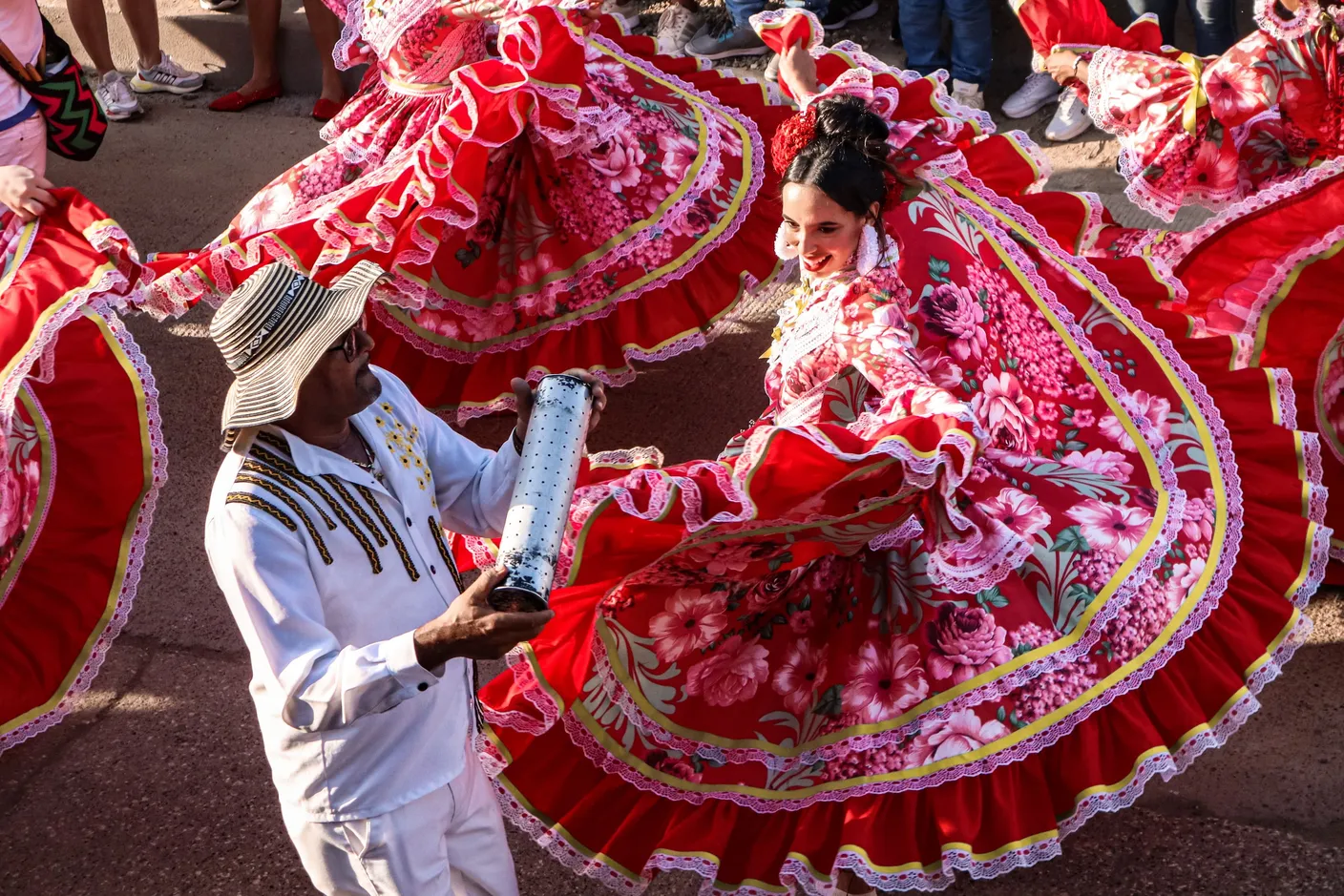
Cumbia is the country’s oldest and most emblematic rhythm, born on the Caribbean coast from the meeting of African drums, Indigenous gaita flutes, and Spanish influence. In its traditional form it’s a courtship dance: women in long, wide skirts circle the floor holding bundles of lit candles, men shadowing them with hat in hand, feet shuffling close to the ground.
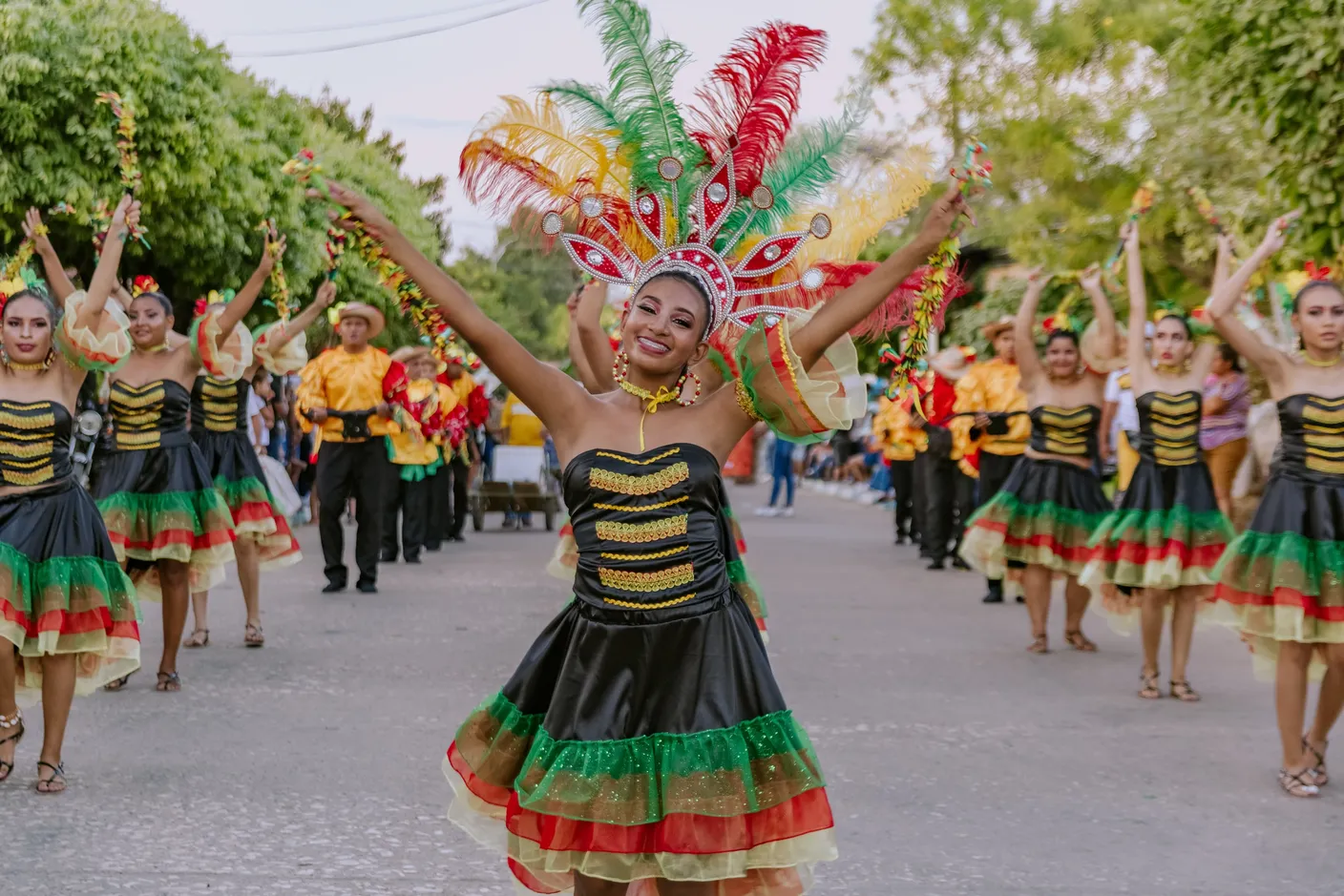
You’ll most often see traditional cumbia in folkloric shows and at coastal festivals rather than in nightclubs, where modern variations dominate. The Carnaval de Barranquilla (the four days before Ash Wednesday, usually February or March), one of the largest carnivals on earth, is the single best place to see cumbia and its cousins danced in full costume, alongside garabato, mapalé, and dozens of other forms.
Champeta: Cartagena’s Afro-Caribbean Beat
Where cumbia is the heritage, champeta is the heartbeat of the coast today. Rooted in the Afro-Colombian communities of Cartagena and nearby San Basilio de Palenque, the first free town of formerly enslaved Africans in the Americas, champeta is loud, percussive, and unapologetically sensual, powered by enormous sound systems called picós.
In Cartagena you’ll hear it pounding out of Getsemaní and around Plaza de la Trinidad as the evening warms up, and street dancers often gather to trade moves. It takes confidence to join in, but watching is half the fun, and locals warm quickly to a visitor who’s genuinely curious rather than filming from a distance.
Vallenato: The Accordion’s Story
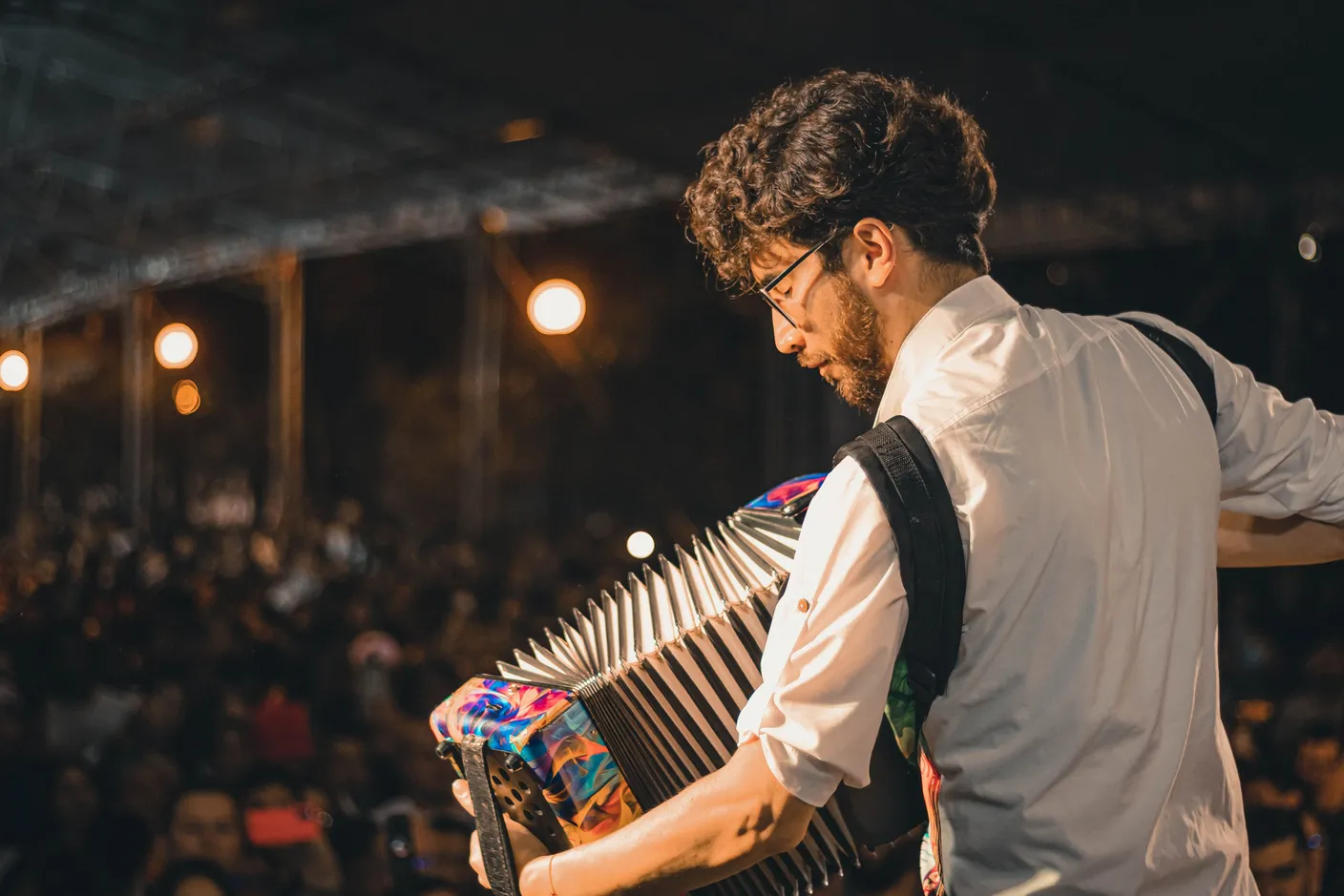
Drift north toward the plains around Valledupar and the rhythm changes again. Vallenato is built around three instruments: the German-descended accordion, the caja drum, and the ridged guacharaca scraper. The songs are essentially sung stories of love, loss, and rural life. It’s less a partner-dance spectacle than a deeply woven part of regional identity, though couples do dance to its swaying paseo and faster merengue rhythms.
The pilgrimage event is the Festival de la Leyenda Vallenata in Valledupar (late April to early May), whose centerpiece is a fiercely contested accordion competition crowning a Rey Vallenato, the highest honor in the genre.
The Pacific Sound: Currulao & the Petronio Álvarez Festival
Colombia’s Pacific coast holds one of its least-known and most powerful musical traditions: currulao, an Afro-Colombian form led by the wooden marimba, call-and-response singing, and a battery of drums. The dance is intense and grounded, full of advance-and-retreat between partners.
The best way to experience it without traveling to the remote coast is the Festival de Música del Pacífico Petronio Álvarez, held in Cali each August, the largest celebration of Afro-Pacific culture in the Americas, with days of competing ensembles, traditional food, and dancing. It’s a remarkable companion to Cali’s salsa scene and a reason in itself to time a visit for late summer.
Other Rhythms to Know
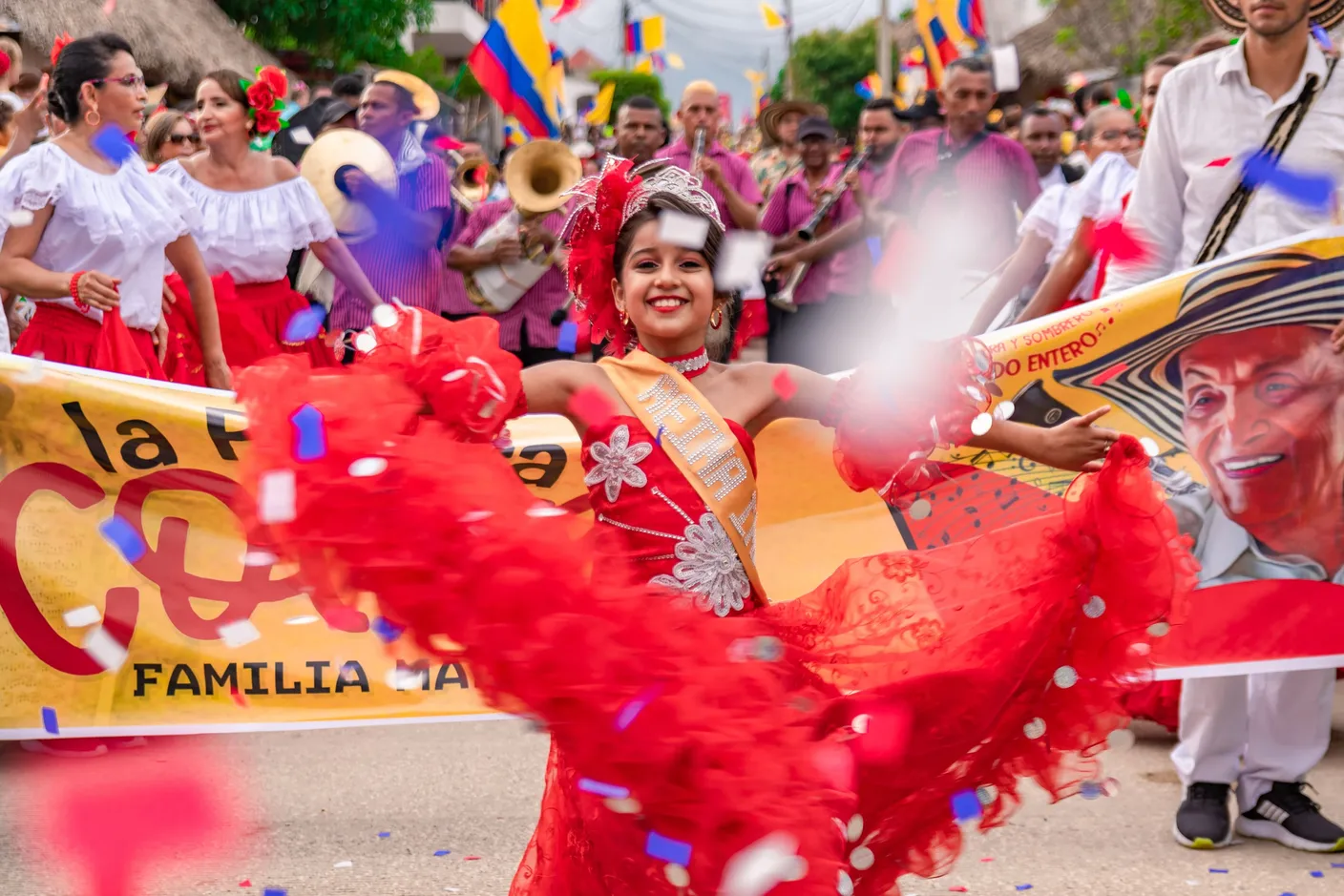
- Mapalé: a frenetic, athletic Afro-Caribbean dance of rapid hips and drums; a carnival showstopper.
- Porro & fandango: brass-band rhythms from the savannas of Córdoba and Sucre.
- Bambuco & pasillo: gentler string-led Andean dances from the interior highlands.
- Reggaetón & urban: in the big-city nightlife of Medellín and Bogotá, contemporary urban beats dominate the clubs; Medellín in particular is a hub of Colombia’s global reggaetón wave.
Where to Learn: Dance Schools & Classes
You don’t need any experience to start. Across the country, dance academies welcome absolute beginners, and a class is also a relaxed, safe way to meet people.
- Cali is the obvious choice for salsa, with the deepest concentration of schools and instructors.
- Cartagena offers salsa and champeta classes, often through hostels and dedicated studios.
- Medellín and Bogotá have plenty of salsa academies plus bachata and urban styles.
A few practical notes:
- Private vs group: private lessons (roughly COP 50,000–100,000 per hour, varying by city and instructor) progress you fastest; group classes are cheaper, more social, and often free or low-cost through hostels.
- What to wear: comfortable clothes and smooth-soled shoes you can pivot in; avoid grippy trainers.
- Go before you go out: even one or two lessons make a club night far more fun and far less intimidating.
Festivals & When to Go
| Festival | Where | When | Dances |
|---|---|---|---|
| Carnaval de Barranquilla | Barranquilla | Feb/Mar (pre-Lent) | Cumbia, mapalé, garabato |
| Festival de la Leyenda Vallenata | Valledupar | Late Apr–early May | Vallenato |
| Festival Petronio Álvarez | Cali | August | Currulao, Pacific styles |
| Feria de las Flores | Medellín | August | Regional & social dance |
| Feria de Cali | Cali | December 25–30 | Salsa |
Dates shift slightly year to year, so confirm the current edition before booking, and book accommodation early, as host cities fill up fast.
Tips for First-Time Dancers
- Asking to dance is normal and low-pressure: a smile and a nod toward the floor is enough. A polite “no, gracias” is equally fine to give or receive.
- Leading and following: social dancing here works on a lead-and-follow basis; you don’t need choreography, just to listen and respond. Beginners are welcomed far more warmly than you’d expect.
- Watch first. Sit with a drink, feel the timing, and notice how locals move before you step in.
- A little Spanish goes a long way for swapping names and laughing off missteps.
- Getting home: the best dancing often runs late and far from the center. Don’t assume an area is fine after dark; ask your accommodation about the specific venue, and arrange a booked ride both ways. See our Colombia safety guide for the practical basics.
Conclusion
You can read about Colombian dance all you like, but the country only really makes sense once you’re on the floor: sweating through a salsa in Cali, swaying to an accordion in the north, or losing yourself in the drums at the Petronio. Take a class, accept the invitation when it comes, and let the rhythm do the rest. It’s the warmest welcome Colombia offers.