
Updated
On this page
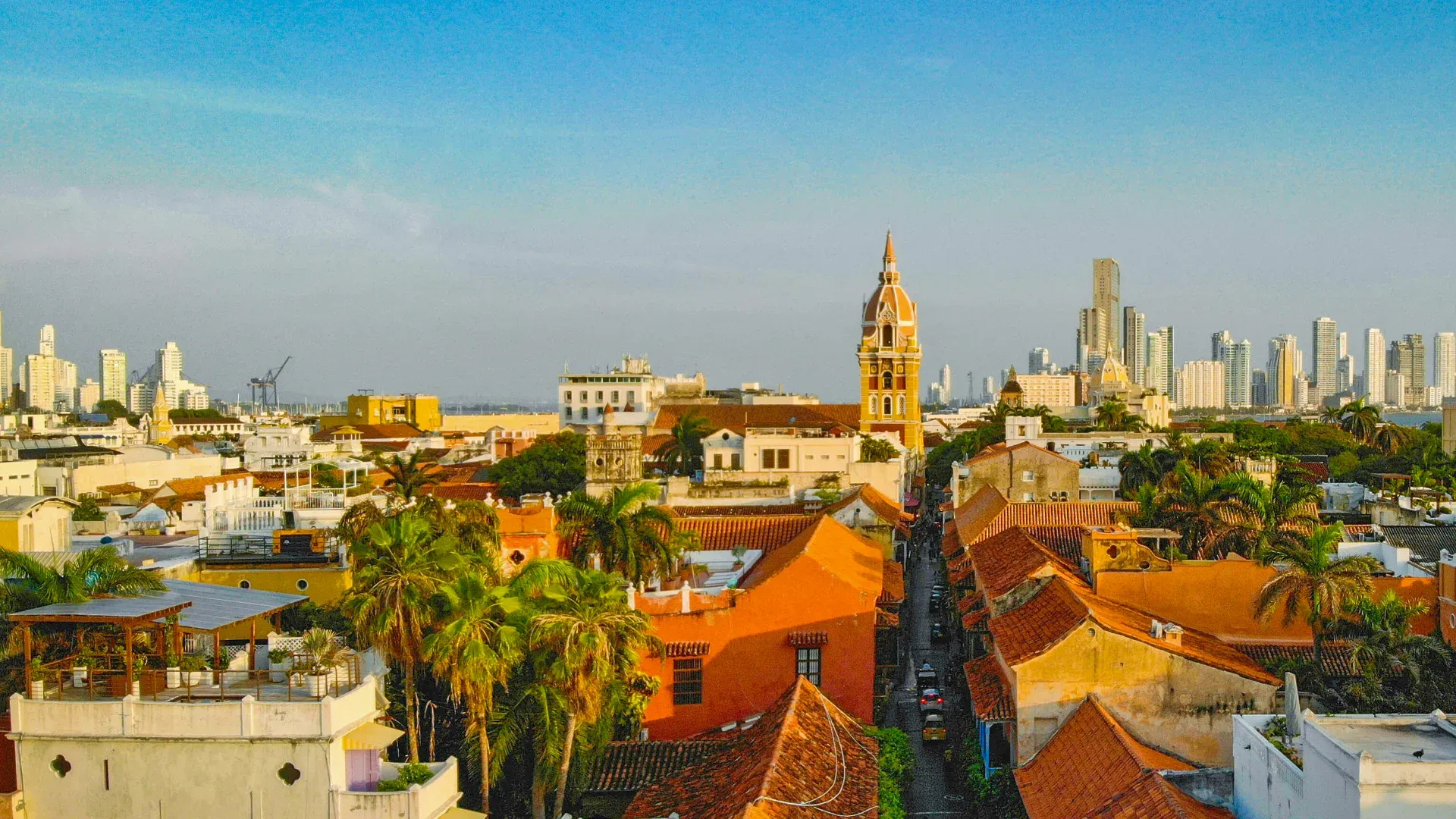
Cartagena de Indias is Colombia’s most famous city for visitors: a walled colonial port on the Caribbean, with brightly painted streets, wooden balconies spilling bougainvillea, and stone fortresses built to keep out pirates and rival empires. Its old town and fortifications are a UNESCO World Heritage Site, and the city combines them with island beaches, a lively food scene, and the music and energy of the Caribbean coast.
It is also hot, busy, and very much a tourist city, with prices to match in the walled center. Plan around the heat, choose your base with care, and give yourself time to look beyond the postcard streets, and Cartagena rewards you.
About Cartagena
Cartagena de Indias is the capital of Bolívar department, on Colombia’s Caribbean coast, with about 1 million people, according to projections by DANE, Colombia’s statistics agency. It is a major port and one of the country’s main tourist destinations. Founded in 1533 by the Spanish conquistador Pedro de Heredia, it became one of the most important ports of Spain’s American empire, through which gold and silver were shipped to Spain and enslaved Africans were brought to the continent.
That wealth made it a target, so the Spanish ringed the city with walls and forts over two centuries. The largest, the Castillo San Felipe de Barajas on the hill of San Lázaro, was begun in 1657 and is the largest Spanish colonial fortress in the Americas. The historic center is made up of three neighborhoods: Centro and San Diego inside the walls, and Getsemaní just outside them. UNESCO listed the “Port, Fortresses and Group of Monuments” in 1984.
Cartagena is hot all year, with daytime temperatures around 30°C (86°F) and high humidity. The main difference through the year is the rain. The drier months run roughly from December to April, when trade winds make the heat easier to bear, and the rainier season from May to November, with October usually the wettest month. Sea temperatures stay around 27°C to 29°C, warm enough for swimming all year.
| Weather | Typical values |
|---|---|
| Daytime temperature | Around 30°C (86°F) all year |
| Rainfall (yearly) | About 1,000 mm, most of it from May to November |
| Wettest month | October |
| Sea temperature | 27°C to 29°C |
The city’s calendar includes the Cartagena International Music Festival and the Hay Festival, both in January, and the celebrations of the city’s independence around November 11.
Best Time to Visit Cartagena
Cartagena is warm whenever you go. What changes is the rain, the crowds, and the price.
Weather and Seasons
From December to April, rain is rare and the trade winds take the edge off the heat, particularly from December to March. This is the most comfortable time to walk the city, and the busiest.
From May to November, the rainy season brings afternoon downpours, more humidity, and occasional storms, with October usually the wettest month. Showers tend to be heavy but short, and mornings are often dry, so plan sightseeing early and keep the afternoon flexible.
Peak vs Off-Peak Travel
December, January, Easter week (Semana Santa), and the June to July school holidays are the busiest times, when hotels in the walled city fill up and prices rise. Book well ahead for December and January in particular. Cruise ships also bring large day crowds to the old town for much of the year; our post on Cartagena’s cruise season explains how to plan around them, and our look at Colombia’s record tourism year has the figures behind the city’s growth.
The quieter months, especially September to November, bring lower hotel rates and calmer streets, in exchange for more rain and humidity. Late November, as the rains ease and the independence celebrations fill the streets, can be a good compromise.
Getting to Cartagena
Cartagena’s Rafael Núñez International Airport (CTG) is in the Crespo neighborhood, a few kilometers north of the walled city, so the drive into town is short.
International Flight Options
Cartagena has direct international flights from the United States, including Florida and New York, and from Panama, along with seasonal routes from Canada and other countries. Many visitors from Europe connect through Bogotá, Medellín, Panama City, or a US hub. Routes change often, so check current options when you book.
Domestic Connections
Frequent domestic flights link Cartagena with Bogotá, Medellín, Cali, and other Colombian cities, operated by Avianca, LATAM, and low-cost carriers. Bogotá is about an hour and a half away by air.
Airport Transfers and Transportation
Cartagena’s taxis do not use meters. Fares are set by the city each year, and from the airport they are fixed by zone (the walled city, Getsemaní, Bocagrande, and so on), posted at the authorized taxi stands outside the domestic and international exits. Use those stands rather than drivers who approach you inside the terminal. Within the city, the 2026 minimum fare is COP 12,250 (about USD 4), with a COP 1,100 (about USD 0.30) surcharge from 7:00 PM to 5:00 AM; agree the fare before you get in.
You can also book a hotel transfer, or use a ride-hailing app, though app pickups at the airport need coordinating. Our guide to getting around Cartagena covers every option.
Top Attractions and Activities
Cartagena’s sights range from colonial fortresses and churches to island beaches and some excellent museums. For a ranked shortlist with locations and practical tips, see our top 15 things to do in Cartagena.
Historic Sites and Colonial Architecture
The walled city is the main event: a grid of narrow streets lined with colonial houses, churches, and plazas, best explored on foot in the early morning or late afternoon. Enter through the Torre del Reloj, the clock tower gate that is the old town’s main entrance. Las Bóvedas, 23 vaults built into the city walls at the end of the colonial period, now house craft shops.
Plaza Santo Domingo is home to Fernando Botero’s reclining bronze “Gertrudis” and the Church of Santo Domingo, one of the oldest in the city. The Palace of the Inquisition, seat of the Spanish tribunal that operated in Cartagena from 1610 until independence, is now a museum. The Casa Museo Rafael Núñez, in the Cabrero neighborhood just outside the walls, was the home of the president who led Colombia in the late 19th century.
Castillo San Felipe de Barajas, a short taxi ride from the walled city, is the most impressive of the fortresses. Its tunnels and ramparts are fascinating, but there is little shade, so go early or in the late afternoon, wear a hat, and bring water. In 2026, entry costs COP 38,000 (about USD 12) for foreign visitors, and it is open daily from 7:00 AM to 6:00 PM.
For the best view over the city and the bay, take a taxi up to the Convento de la Popa, on the hill of the same name. Go by taxi, not on foot: the road up passes through neighborhoods where walking carries more risk.
Beaches and Island Tours
Cartagena’s own beaches, in Bocagrande and Castillogrande, are urban: convenient, but busy and with darker sand. For the classic Caribbean picture, most visitors take a boat trip.
- Rosario Islands (Islas del Rosario): an archipelago of small coral islands within the Corales del Rosario y San Bernardo National Natural Park, about an hour by boat. Clearer water and snorkeling on the reefs.
- Playa Blanca, on the island of Barú: a long white-sand beach, reachable by boat or by road over the bridge onto Barú. Beautiful, but busy and full of vendors, especially at midday.
- Tierra Bomba: the island just across the bay, a short boat ride away, with beach clubs.
- La Boquilla: a fishing village just north of the city, known for mangrove canoe tours.
Most boats leave from the Muelle de la Bodeguita, the pier opposite the Torre del Reloj. On top of the tour price, you pay a port fee (tasa portuaria) at the pier, in cash, plus national park and insurance charges for some destinations, so ask what your ticket includes. Book through an established operator rather than a tout on the street, and check that the boat carries life jackets. Our transport guide explains how island trips work.
Museums and Cultural Experiences
The Gold Museum (Museo del Oro Zenú), run by Colombia’s central bank, displays gold and ceramics from the Zenú culture of the Caribbean lowlands, and entry is free. The Naval Museum of the Caribbean tells the story of the city’s sieges and sea battles. The Museum of Modern Art (MAMC), in an old customs building on Plaza San Pedro Claver, shows Colombian art.
Other experiences worth considering:
- Cooking classes covering Caribbean dishes such as coconut rice and fresh ceviche
- Salsa and champeta classes in Getsemaní
- Street art walks in Getsemaní, whose murals are a big part of the neighborhood’s identity
- Live music in Getsemaní’s bars and plazas, especially at night around Plaza de la Trinidad
Practical Travel Tips
These are the practical points that make the biggest difference in Cartagena. Choosing a base? Our guide on where to stay in Cartagena compares the main areas.
Budget and Costs
Cartagena is one of Colombia’s most expensive cities, especially inside the walls, and prices rise further in December and January. For daily budgets and how they compare with the rest of the country, see our guide to the cost of traveling in Colombia.
Cards are accepted at hotels and established restaurants, but street vendors, small cafés, taxis, and boat operators expect cash. Use ATMs inside banks or shopping centers, and check what your bank charges for foreign withdrawals. Restaurants usually add a suggested 10% service charge (propina voluntaria) to the bill, which you can decline; taxi drivers do not expect tips.
Safety Considerations
We compare what four governments currently advise about Colombia, each advisory dated and quoted. The UK FCDO names the Caribbean coast, along with the major cities, among the places where pickpocketing, mugging, and armed robbery are a problem.
In Cartagena, most problems visitors run into are theft, overcharging, and scams. The crowded plazas and streets of the walled city and Getsemaní are where pickpockets and phone snatchers work, especially when they are busiest, around midday and in the evening. The habits that make the biggest difference:
- Keep your phone out of sight on the street, and your passport and spare cash in the hotel safe
- Use ride-hailing apps, or taxis from official stands or called by your hotel, and agree the fare first
- After dark, stay on busy, well-lit streets in the walled city, Getsemaní, and Bocagrande, and take a taxi rather than walk quiet streets or empty beaches
- Book tours and boat trips through established operators with a Registro Nacional de Turismo (RNT) number, Colombia’s tourism business registration, rather than street touts
- Agree a price before taking a photo with a palenquera, the women in colorful dresses selling fruit, or accepting anything from a vendor
Our safety guide for Colombia covers the rest.
Emergency numbers: dial 123 for all emergencies, free from any phone in Colombia, with no +57 prefix. Tourist police patrol the historic center and Bocagrande. Cartagena has private clinics used to treating visitors, but foreign patients are usually asked to pay up front, so travel insurance covering medical care is essential.
Local Customs and Etiquette
Cartageneros value politeness and appearance. Beachwear is for the beach: cover up in restaurants, shops, churches, and the old town, and consider long trousers or a dress for dinner in the better restaurants.
Greetings are warm: a handshake on first meeting, and a kiss on the cheek between acquaintances. Saying “buenos días” or “buenas tardes” when you enter a shop or a taxi is expected.
In churches such as San Pedro Claver and the Cathedral, cover your shoulders and knees, remove your hat, and keep your voice down, and check for photography restrictions during services.
Bargaining is normal at markets and with street vendors, but not in established shops or restaurants. Keep it friendly, and a little Spanish, such as “¿Cuánto cuesta?” (how much is it?), goes a long way.
Day Trips from Cartagena
Cartagena makes a good base for island beaches, the Afro-Colombian village of San Basilio de Palenque, and the coast beyond.
Rosario Islands
The Rosario Islands are a small archipelago of coral islands south of Cartagena, part of the Corales del Rosario y San Bernardo National Natural Park, which protects one of the most important coral reef areas in the Colombian Caribbean. Boats leave from the Muelle de la Bodeguita in the morning and take about an hour.
Day trips usually include the boat, lunch, and time on a beach or at a beach club, and many stop at the Oceanario, an aquarium on Isla San Martín de Pajarales. Snorkeling on the reefs is the highlight; bring reef-safe sunscreen and do not touch or stand on the coral. Longer trips continue to the San Bernardo islands, such as Múcura and Tintipán, which are further and better as an overnight stay. Check what your ticket includes, as the port fee and park charges are often extra.
Playa Blanca
Playa Blanca is a long white-sand beach on the island of Barú, south of Cartagena. You can reach it by boat from the Muelle de la Bodeguita, or by road over the bridge across the Canal del Dique onto Barú, which takes roughly an hour.
It is beautiful, but it is also busy, and vendors are persistent, especially in the middle of the day. Agree prices for food, drinks, chairs, and any activities before you accept them, as overcharging here is common. The beach is quieter early in the morning and in the late afternoon, after the day boats leave, and staying overnight in one of the simple cabañas lets you see it at its best. Swim only where the water is calm, since there are no lifeguards on much of the beach.
San Basilio de Palenque
San Basilio de Palenque, about an hour and a half by road southeast of Cartagena, was founded by people who escaped slavery in the colonial period, and is often described as the first free town in the Americas. UNESCO proclaimed its cultural space a Masterpiece of the Oral and Intangible Heritage of Humanity in 2005, recognizing the community’s African-rooted traditions and its own language, Palenquero.
Visiting with a local guide from the community is the best way to understand Palenque’s history, music, medicine, and food. The village is also the home of the boxer Antonio Cervantes, “Kid Pambelé,” Colombia’s first world boxing champion. Many of the palenqueras who sell fruit in Cartagena’s plazas come from here.
Beyond Cartagena
Colombia’s Caribbean coast continues far beyond Cartagena’s walls, with colonial towns, other cities, and national parks within a few hours.
Santa Marta and Tayrona National Park
Santa Marta, founded in 1525, is Colombia’s oldest surviving Spanish city, and about four to five hours from Cartagena by road. It is the gateway to Tayrona National Park, where jungle runs down to boulder-framed beaches, and to the trek to the Lost City (Ciudad Perdida).
Tayrona closes several times a year so its ecosystems can recover and for the ceremonies of the Indigenous peoples of the Sierra Nevada, and it has had unscheduled closures too, so check its status before you plan around it. Our Tayrona guide has the current fees and closure dates.
Barranquilla
Barranquilla, about two hours northeast of Cartagena by road, is Colombia’s fourth-largest city. It is best known for its Carnival, held in the days before Ash Wednesday (usually in February or early March), one of the biggest in the world. UNESCO proclaimed it a Masterpiece of the Oral and Intangible Heritage of Humanity in 2003. Outside Carnival, the Museo del Caribe is the main reason to visit.
Mompox
Santa Cruz de Mompox, on a branch of the Magdalena River, is one of Colombia’s best-preserved colonial towns and a UNESCO World Heritage Site since 1995. Its riverside streets, churches, and filigree silver workshops repay a slow visit. It is a long trip from Cartagena, several hours by road, so plan to stay at least one night.
Practical Connections
- Buses leave Cartagena’s Terminal de Transportes for Barranquilla, Santa Marta, and other cities throughout the day.
- Door-to-door shuttles (puerta a puerta) run to Barranquilla and Santa Marta, picking up from hotels, for a little more than the bus.
- Domestic flights link Cartagena with Bogotá, Medellín, Cali, and other cities.
- Private transfers suit groups and travelers with a lot of luggage.
Travel between cities by day where you can. Allow at least three or four days for Cartagena itself, and a week or more to add the islands, Palenque, and the coast.
Final Thoughts
Cartagena is Colombia’s most photogenic city, where centuries of history meet the energy of the Caribbean. The walled city at sunset, champeta in Getsemaní’s plazas, and a fortress built to withstand empires are hard to forget.
Plan around the heat, keep your wits about you in the crowds, and step beyond the walled city to Getsemaní, the islands, and Palenque. Cartagena is at its best for travelers who look past the postcard.
- The Essential Guide to Cartagena
- Getting around Cartagena - The Definitive Guide
- Where to Stay in Cartagena
Sources
- DANE: population projections (2026 projection for Cartagena)
- Fortificaciones de Cartagena: Castillo de San Felipe de Barajas, hours and prices (checked October 1, 2026)
- El Universal: Cartagena taxi fares for 2026 (February 27, 2026)
- UK FCDO: Colombia travel advice, safety and security (checked October 1, 2026)
- UNESCO World Heritage: Port, Fortresses and Group of Monuments, Cartagena
- UNESCO World Heritage: Historic Centre of Santa Cruz de Mompox
- Banco de la República: Museo del Oro Zenú
- Cartagena: official tourism site
- Cartagena de Indias: Colombia’s official tourism site