

Updated
On this page
Colombia is the world’s third-largest coffee exporter, and the heart of its coffee identity lies in a region known as the Eje Cafetero (Coffee Axis). Spanning the departments of Caldas, Risaralda, and Quindío in the central Andes, this area produces some of the finest Arabica coffee on earth, grown on steep hillsides at elevations between 1,000 and 2,000 meters.
But the Eje Cafetero isn’t just farmland. In 2011, UNESCO inscribed the Coffee Cultural Landscape of Colombia as a World Heritage Site, recognizing it as an exceptional example of a sustainable and productive cultural landscape shaped by generations of farming families. The colorful colonial towns, the hand-picking traditions, the family-run fincas, the Willys Jeeps bouncing along mountain roads; this is a place where coffee isn’t just a crop. It’s a way of life.
Whether you’re a serious coffee enthusiast or a traveler drawn to green mountains and small-town warmth, the Eje Cafetero is one of Colombia’s most rewarding destinations. This guide covers everything you need to plan a visit.
This page focuses on the coffee culture itself. For the wider trip, we have built out a dedicated Coffee Region hub that pulls together everything else you need, including a detailed look at where to stay across the region and a full breakdown of how to get around once you arrive.
The Coffee Region: Where to Go
The Coffee Triangle is anchored by three departmental capitals: Manizales (Caldas), Pereira (Risaralda), and Armenia(Quindío). These are mid-sized cities that serve mainly as transport hubs. The real draw for visitors lies in the smaller towns scattered across the surrounding hills. If you’re weighing up which of these towns to base yourself in, our guide to where to stay in the Coffee Region compares them in detail.
Salento
The most popular base for visitors. Salento is a small, photogenic pueblo in Quindío with brightly painted colonial architecture, a lively main street (Calle Real) lined with artisan shops and cafes, and easy access to both coffee farms and the famous Valle de Cocora. It’s well set up for tourism, with hostels, boutique hotels, restaurants, and tour operators all within walking distance of the main plaza. The trade-off is that it gets busy, especially on weekends and holidays.
Filandia
About 35 minutes from Salento by Willys Jeep, Filandia offers a quieter, less touristy alternative. It has a similarly charming colonial center, a panoramic viewpoint (Mirador Colina Iluminada), and access to excellent coffee farms. Filandia is also known for its traditional basketweaving workshops using natural fibers. If you prefer a more intimate coffee tour experience without the crowds, start here.
Pijao
For travelers who want to go further off the beaten path, Pijao is a tranquil town south of Armenia that has stayed largely untouched by mainstream tourism. It’s surrounded by coffee plantations and rolling green hills, and offers a genuine window into everyday life in Colombia’s coffee country. Accommodation options are more limited, but the authenticity is hard to beat.
The Capital Cities
While most visitors pass through Manizales, Pereira, and Armenia quickly, each has something to offer. Pereira is the largest and most cosmopolitan, with good restaurants and nightlife. Manizales sits at a higher elevation with cooler temperatures and proximity to Los Nevados National Park. Armenia is the quietest of the three but the closest to Salento and the Quindío coffee farms.
Coffee Farm Tours
A visit to a working coffee finca is the centerpiece of any trip to the Eje Cafetero. These tours walk you through the entire journey from seed to cup: how coffee is planted, maintained, harvested, depulped, dried, roasted, ground, and brewed. Most tours last two to three hours and end with a tasting of freshly prepared coffee right on the farm.
What to Expect
You’ll walk through coffee fields on hillsides (sometimes steep ones), learn to identify ripe coffee cherries, see the machinery used for processing, and watch or participate in roasting. Guides explain the differences between varieties, how altitude and climate affect flavor, and why Colombian coffee is predominantly Arabica. The tasting at the end is where it clicks — freshly roasted, single-origin coffee tastes nothing like what most people are used to.
Well-Known Fincas Near Salento
Finca El Ocaso is one of the most popular and highly rated farms, about a 15-minute Jeep ride or one-hour walk from Salento. It runs frequent group tours and is a solid introduction to the coffee process.
Finca Don Eduardo is a boutique farm just an eight-minute walk from Salento’s town center. Tours run twice daily (9:30 AM and 2:30 PM, Monday through Saturday) and cost around COP 100,000 per person. Known for passionate, knowledgeable guides.
Cafe Jesus Martin offers a longer, more immersive experience (around five hours) that starts at their cafe in Salento and takes you to their finca outside the nearby town of Montenegro. This one is for visitors who want the deep dive. Contact them directly to book and confirm pricing.
Finca Momota is a permaculture-focused farm run by a Spanish couple. Their tours emphasize sustainable agriculture alongside coffee production. Tours run daily; the standard tour is around two hours.
Fincas Near Filandia
Filandia has its own set of excellent farms, generally with smaller group sizes. Several operations here are family-run and offer a more personal experience. Ask at your accommodation or at the local tourism office for current recommendations, as new farms open for tours regularly.
Coffee Tour Prices and Practical Tips
Coffee tour prices in the region generally range from COP 35,000 to 100,000 per person (roughly USD $11 to $31), depending on the farm, tour length, and group size. Keep the following in mind:
- Book ahead if you want a tour in English. Most farms offer both Spanish and English, but English tours may run only at specific times.
- Wear sturdy shoes. Fincas are working farms on hillsides. The terrain can be muddy, especially during rainy periods.
- Harvest seasons affect what you’ll see. The main harvest runs from October through December. A secondary harvest called the mitaca runs roughly April through June. Outside these windows you’ll still get a full tour, but you may not see active picking.
- Bring cash. Many smaller farms don’t accept cards, or charge a surcharge (typically 6%) for card payments.
Beyond Coffee: What Else to Do
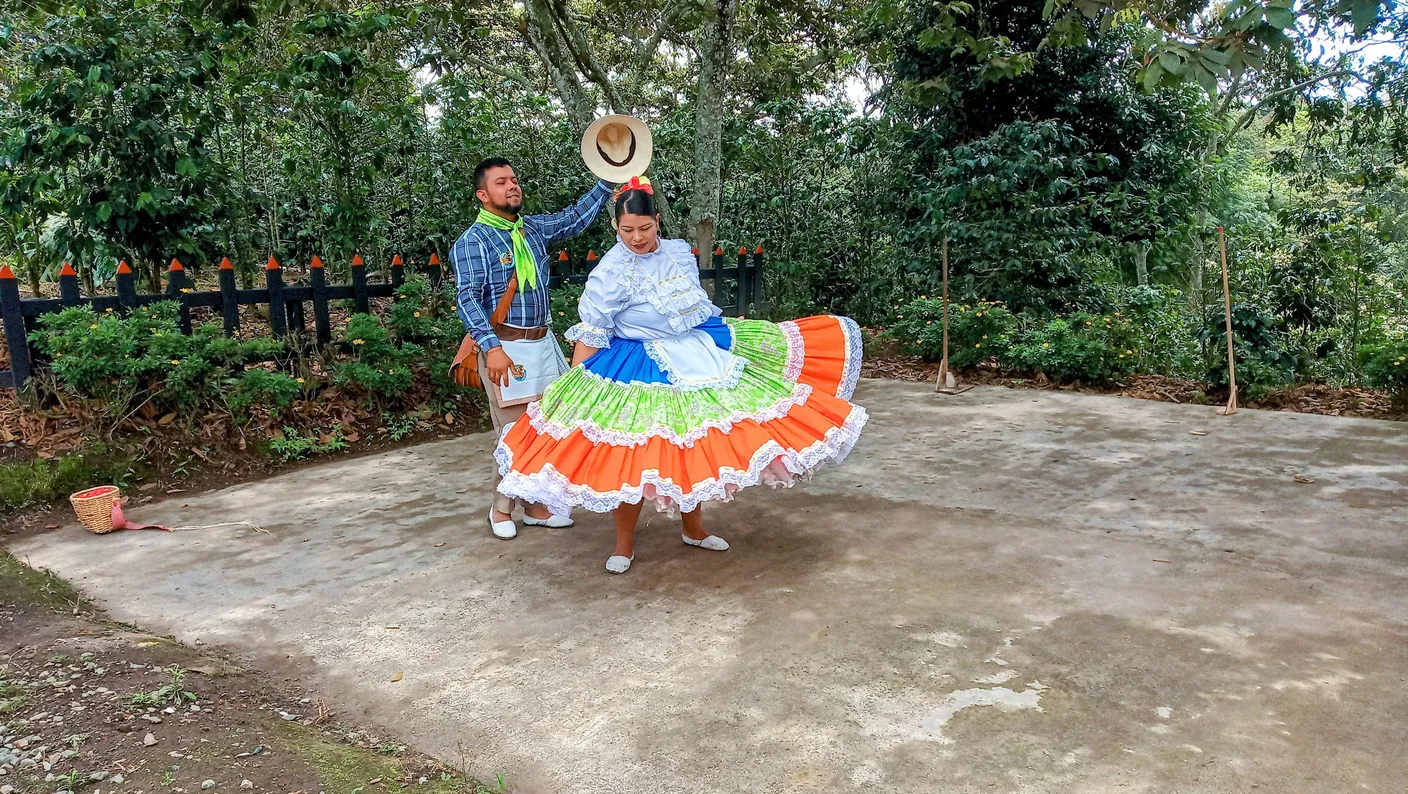
The Eje Cafetero rewards visitors who stay three to five days. Coffee is the main draw, but the region has plenty more. For a fuller rundown, see our list of the top 15 things to do in the Coffee Region.
Valle de Cocora
Colombia’s most iconic hiking destination is just outside Salento. The valley is home to the palma de cera (wax palm), Colombia’s national tree and the tallest palm species in the world, reaching heights of up to 60 meters. The standard loop hike takes four to five hours and passes through cloud forest and open valley landscapes. Willys Jeeps run from Salento’s main plaza to the trailhead regularly.
Hot Springs at Santa Rosa de Cabal
About 20 minutes north of Pereira, the thermal springs at Santa Rosa de Cabal (Termales de Santa Rosa) are fed by natural hot mineral water. It’s an ideal way to recover after a day of hiking or farm tours.
Parque Nacional del Cafe
Located near Montenegro in Quindío, this coffee-themed park combines rides and shows with exhibits on coffee history and culture. It’s a good option for families or anyone looking for a lighter, more entertainment-oriented take on the coffee experience. Entry runs around USD $15 to $25.
Birding
Colombia has the highest number of bird species of any country on earth, and the Coffee Triangle is one of the best places to see them. The mix of coffee plantations, cloud forest, and open farmland creates habitat for hundreds of species, including hummingbirds, tanagers, toucans, and the endemic yellow-eared parrot. Several reserves in the region offer guided birding tours.
Willys Jeep Rides
The colorful, open-air Willys Jeeps that serve as local transport throughout the region are an experience in themselves. Originally left behind after the Korean War, they’ve become an icon of the Eje Cafetero. A ride from Salento to the Valle de Cocora trailhead costs just a few thousand pesos.
More experiences: For those who want even more! Colombia has a host of thrilling experiences for everyone.
Getting There and Getting Around
By Air
The two main airports serving the coffee region are Aeropuerto Internacional Matecana (PEI) in Pereira and El Eden International Airport (AXM) in Armenia. Both receive daily domestic flights from Bogota (about one hour), Medellin (35 to 45 minutes), and Cartagena. Avianca is the main domestic carrier, with Wingo and LATAM also operating routes. Pereira also has direct international flights from Fort Lauderdale and Panama City.
Armenia’s airport is closer to Salento (about 40 minutes by bus or 30 minutes by taxi), making it the more convenient option if Salento is your primary destination.
By Bus
Buses run from Bogota to Armenia (7 to 9 hours) and to Pereira (8 to 10 hours). There’s no direct bus from Bogota to Salento; you’ll transfer at Armenia’s bus terminal, where frequent local buses continue to Salento (about 40 minutes). Flying is strongly recommended over the bus if your budget allows it — domestic flights are often surprisingly affordable and save an entire day of travel.
Getting Around the Region
Once you’re in the coffee region, getting between towns is straightforward. Buses run frequently between Armenia, Pereira, Salento, and Filandia. The iconic Willys Jeeps operate from Salento’s main plaza to the Valle de Cocora and surrounding farms. Taxis are available in the cities. Renting a car gives you the most flexibility to explore smaller towns and farms at your own pace, and the region’s roads are generally in good condition. For route-by-route detail on fares, journey times, and connections, see our full guide to how to get around the Coffee Region.
If you’re arriving from Bogota, make sure to review our Bogota transport guide for tips on getting to El Dorado Airport and navigating the capital.
Practical Tips
Best Time to Visit
The Eje Cafetero has a tropical highland climate with warm days and cool nights year-round. Temperatures typically hover around 20 to 25°C (68 to 77°F) but drop in the evenings, especially at higher elevations.
The driest months are December through March and July through August, making these the most comfortable times for hiking and outdoor activities. That said, rain can come at any time of year in the mountains — even in dry season, afternoon showers are common. The wettest months tend to be April through June and September through November.
If seeing the coffee harvest is a priority, plan for October through December (main harvest) or April through June(mitaca/secondary harvest), keeping in mind that these overlap with wetter weather.
What to Pack
Layering is essential. Days can be warm and sunny, but mornings and evenings get cool, and weather shifts quickly. Bring a rain jacket, comfortable walking shoes with good grip, sunscreen, and insect repellent. A light sweater or fleece for evenings is a good idea.
Budget
The coffee region is generally affordable by international standards. Rough daily budget ranges:
- Budget travelers: COP 60,000 to 120,000 (USD $19 to $37) per night for hostel dorms or basic guesthouses
- Mid-range: COP 120,000 to 400,000 (USD $37 to $125) per night for comfortable hotels or boutique fincas
- Upscale: COP 400,000+ (USD $125+) per night for luxury haciendas and eco-lodges
Meals at local restaurants run COP 15,000 to 40,000 (USD $5 to $12). Coffee tours, as noted above, cost USD $8 to $25 per person.
Connectivity
Cell coverage is reliable in the main towns (Salento, Filandia, Pereira, Armenia) but can be spotty in rural areas and on farms. If you’re planning to navigate using your phone or need reliable data, check our guide to staying connected in Colombia for advice on local SIM cards and coverage.
Safety
The Coffee Region is one of the lower-risk parts of Colombia to travel in. None of its three departments, Caldas, Quindío, and Risaralda, is among the areas where the UK FCDO advises against travel or on the US State Department’s Level 4 “Do not travel” list (both checked October 1, 2026; the advisories compared), and the region’s towns are used to visitors. The risks are the ordinary ones: pickpocketing in busy town squares and bus terminals, and getting caught out on rural roads after dark. Keep valuables out of sight, use registered taxis or ride-hailing apps, and plan farm visits and road trips so you are back before nightfall. Our travel safety practices page covers the rest.
The region was affected by the magnitude 7.4 earthquake of August 10, 2026. Pereira’s airport and the main theme and nature parks have since reopened; our September recovery update has what reopened and when.
Supporting Local Farmers
Colombia’s coffee farmers face real economic pressures, including fluctuating global coffee prices and the challenge of competing with large-scale producers. When you visit, choosing small, family-run fincas over large commercial operations makes a tangible difference. Buying beans directly from farms (rather than airport gift shops) ensures more of your money reaches the people who grew the coffee. Many farms also sell online if you want to reorder once you’re home.
Sources
- UK FCDO: Colombia warnings and insurance (checked October 1, 2026)
- US Department of State: Colombia Travel Advisory (issued March 31, 2026; checked October 1, 2026)