
Updated
On this page
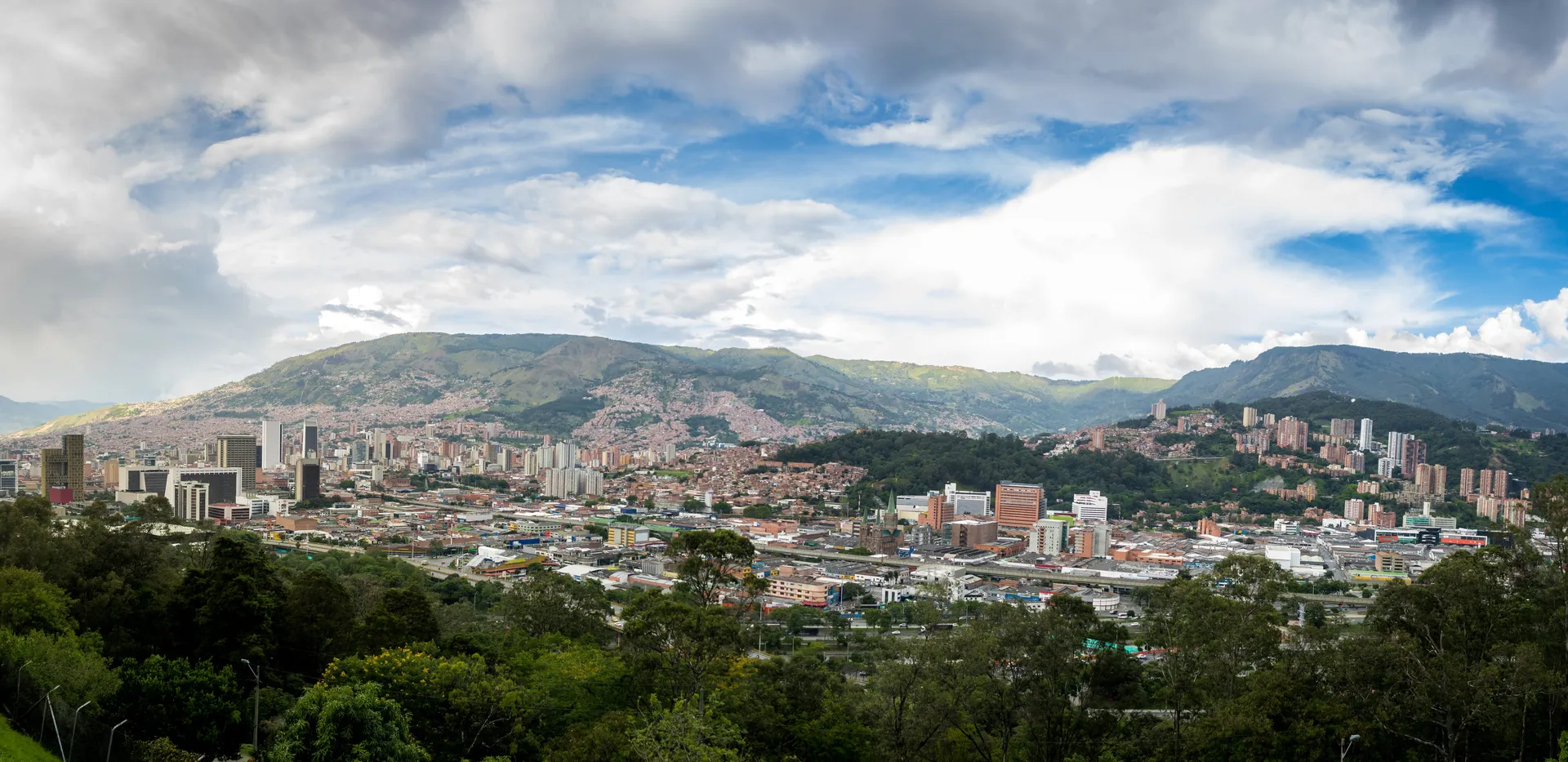
Medellín fills a long green valley in the Andes, a city of about 2.5 million people with a spring-like climate all year. Ride the Metrocable over the hillside neighborhoods, share a tinto with locals in a neighborhood plaza, and you will hear a city proud of how far it has come. It is cosmopolitan and very Colombian at the same time.
This guide is the first-day orientation: how the city is laid out, where to base yourself, how the metro works, and the habits that keep a trip running smoothly. Where a subject deserves more room, it points you to the page that covers it in full: where to stay, getting around, things to do, and safety.
About Medellín
Medellín is the capital of Antioquia department, in northwestern Colombia, with about 2.5 million people in the city and over 4 million across the metropolitan area. The valley, ringed by Andean peaks, gives it the mild climate behind its nickname, the “City of Eternal Spring.”
The city’s story is one of change. Investment in public transport, education, and the hillside neighborhoods has transformed places that were once among the most troubled in the country. The metro, the cable cars, the outdoor escalators in Comuna 13, and the library parks on the hillsides are the visible signs of it.
Today Medellín draws entrepreneurs, artists, remote workers, and travelers from around the world. Paisa culture, with its regional pride and warmth toward visitors, shows up everywhere, from morning coffee to evenings in the neighborhood plazas.
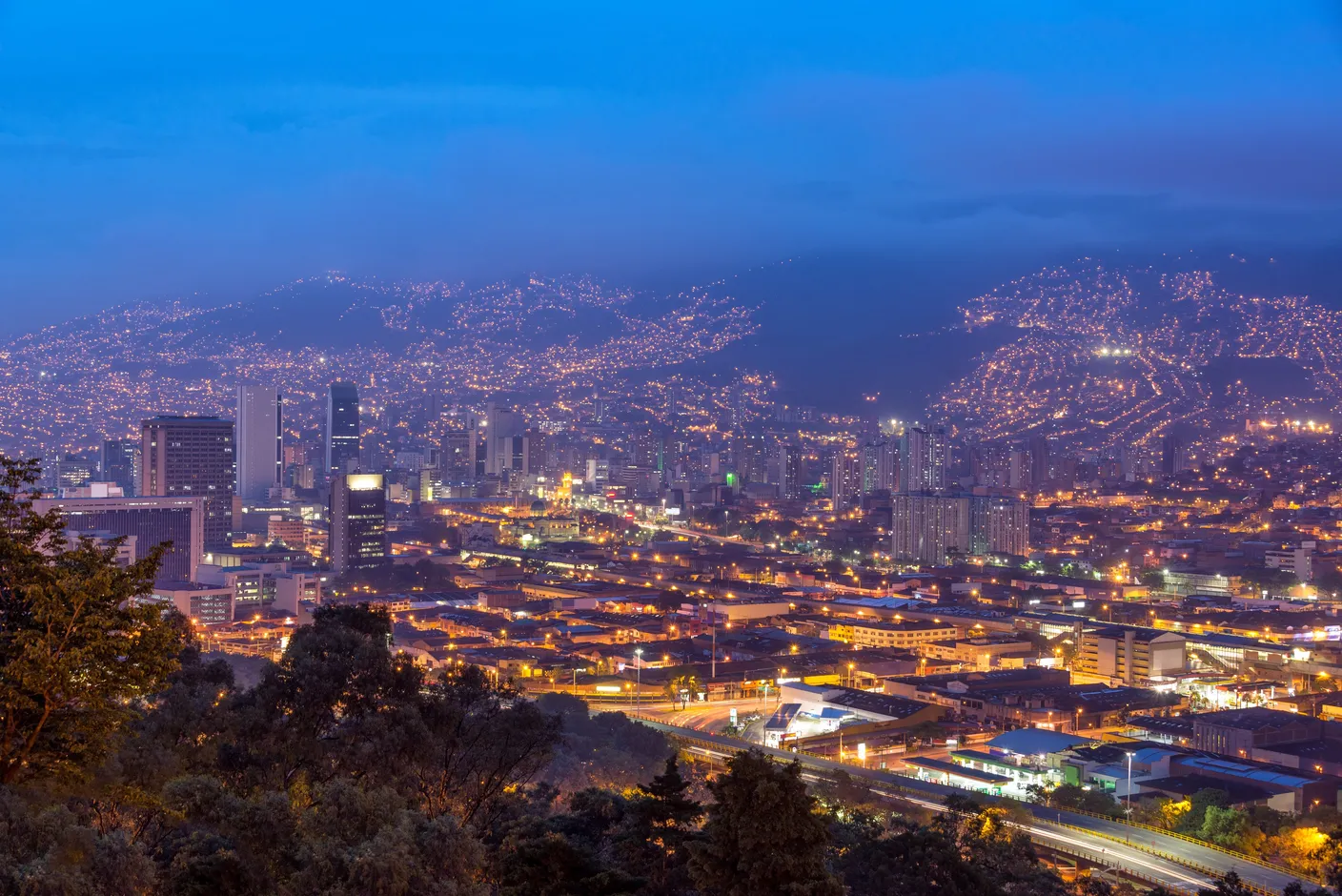 Medellín spreads through the Aburrá Valley, ringed by Andean peaks.
For more on attractions, food, and day trips, see our full Medellín city guide.
Quick Facts About Medellín
| Fact | Value |
|---|---|
| Population | About 2.5 million (city, 2026 projection by DANE); over 4 million (metropolitan area) |
| Elevation | About 1,500 meters (4,900 feet) |
| Language | Spanish |
| Currency | Colombian peso (COP) |
| Time zone | UTC-5 all year (Colombia does not use daylight saving time) |
| Emergency number | 123 |
Paisa Spanish is clear and friendly, and locals are patient with visitors who try. English is common in El Poblado’s hotels and many restaurants, much less so elsewhere.
Check your airport. Most flights, including all international ones, use José María Córdova (MDE) in Rionegro, 45 minutes to an hour or more from the city by road. Some regional flights use Olaya Herrera (EOH), inside the city. The transport guide covers getting into town from both.
Understanding Medellín’s Layout
Medellín runs north to south along the floor of the Aburrá Valley, with neighborhoods climbing the hillsides on both sides. The Medellín River and metro Line A follow the valley’s length, so the metro is the city’s natural spine.
The streets follow Colombia’s numbered grid:
- Carreras (Cra.): run roughly north-south, along the valley
- Calles (Cl.): run roughly east-west, across it
Numbers rise as you go north (calles) and west (carreras), though the hills bend the grid in places. El Poblado is south of the center on the eastern side of the valley, Laureles is west of the river, and Envigado continues south of El Poblado.
Key areas to remember:
- El Poblado: the main area for visitors, south of the center
- Laureles: residential and walkable, west of the river, popular with longer-stay visitors
- El Centro: downtown museums, Plaza Botero, and markets; busy by day, emptier and higher-risk after dark
- Envigado: a separate municipality south of El Poblado, on the metro, with a small-town feel
Address system
Medellín uses the same address format as the rest of Colombia. “Calle 10 # 43-30” means the building is on Calle 10, about 30 meters from the corner with Carrera 43. Taxi drivers and ride-hailing apps work from this system, so having the full address written down saves explaining; when in doubt, show your destination on a map app.
Key Districts
These four areas cover most first-time visitors’ needs. For a full comparison, see where to stay in Medellín.
El Poblado
El Poblado is the default choice for international visitors. Hotels, restaurants, co-working spaces, and nightlife cluster here, especially around Parque Lleras, Provenza, and Manila. Visible police presence and lighting on the main streets make it one of the city’s lower-risk areas. The trade-offs are steep hills, weekend party noise, the highest prices in the city, and nightlife streets where pickpockets and scams aimed at visitors are common, so keep your phone close at night and never leave a drink unattended.
Laureles
Laureles is a flatter, more residential neighborhood west of the river, with tree-lined streets, local restaurants, and Parque Laureles. It feels lived-in rather than touristy, costs less than El Poblado, and is well connected by metro (Estadio station) and taxi. It suits visitors who prefer neighborhood cafés to rooftop bars.
El Centro
Downtown Medellín holds the Museo de Antioquia, Plaza Botero, and much of the city’s historic architecture, along with its cheapest hotels. By day it buzzes with commerce and culture. After dark it empties and carries more risk, so take a taxi or app ride back in the evening. It suits travelers comfortable in busy city centers who put museums and markets ahead of nightlife.
Envigado
Envigado is a separate municipality, connected to Medellín by metro Line A. Its main park, local restaurants, and lower prices attract budget-conscious visitors and long stays. It suits travelers who want metro access and everyday local life more than tourist infrastructure.
Weather and When to Visit
Medellín’s “eternal spring” holds up: temperatures typically range from about 18°C to 28°C (64°F to 82°F) all year. Rain comes mainly as afternoon showers in the wetter months and rarely cancels a whole day.
By season
- Drier months (roughly December to February, and June to August): the clearest skies. December and January bring the alumbrados, the Christmas lights, and peak crowds, so book early.
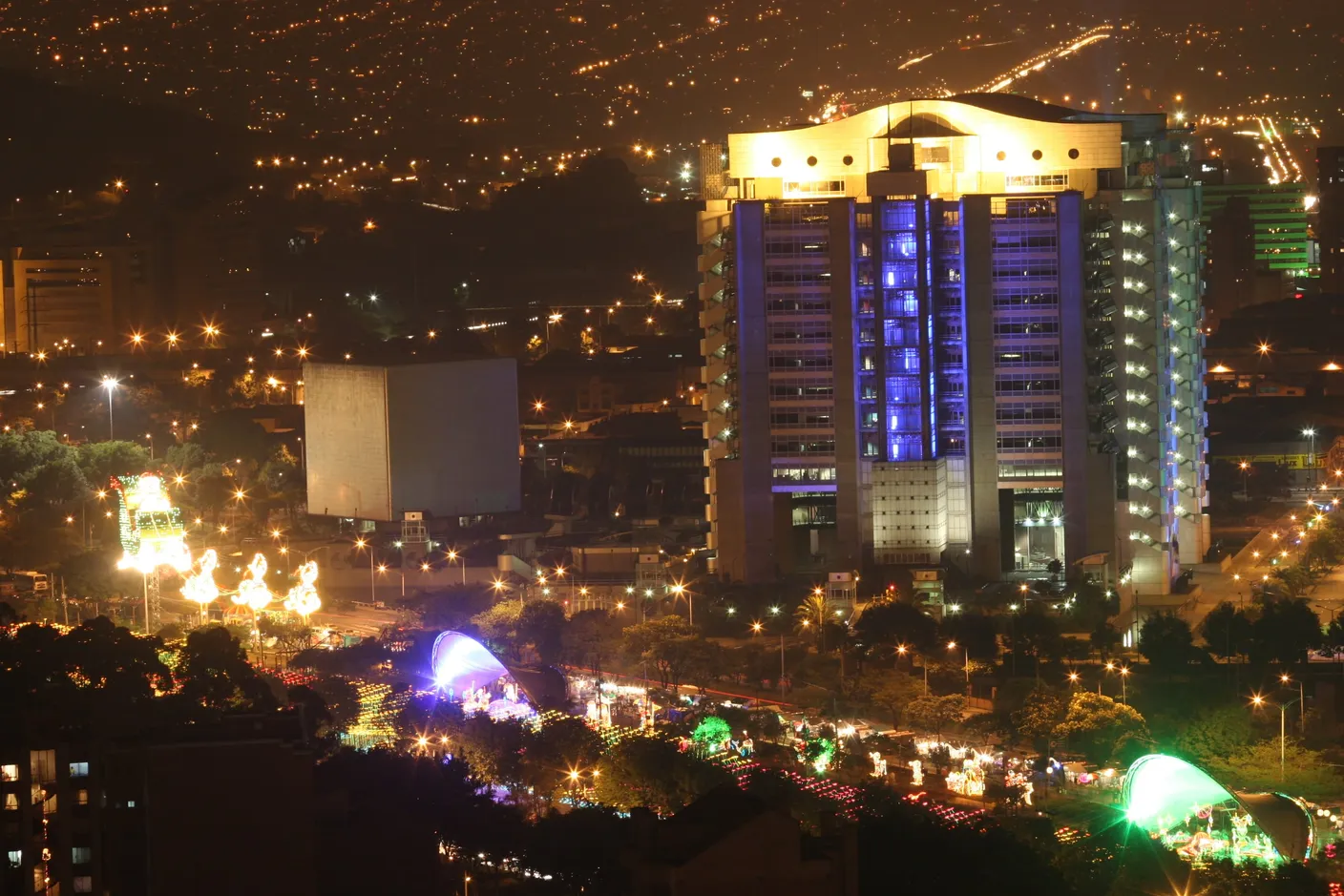 Medellín’s alumbrados transform parks and avenues during the December holiday season.
- Rainier months (roughly March to May, and September to November): more afternoon rain, greener hills, and fewer visitors. Pack a light rain jacket.
- Festival peaks: the Feria de las Flores in early August and Semana Santa draw big domestic crowds, with prices to match and cultural programming at its best.
Layers work best: mornings can be cool, afternoons warm. Bring sunscreen, too; the sun is strong at this altitude even when it is cloudy.
Essential Safety Tips
Risk in Medellín depends on where you are and when. Most crime against visitors is phone snatching, pickpocketing, and theft, especially in nightlife areas and crowds. The other risk both the UK and US governments single out is drug-facilitated robbery, often through bars and dating apps; our Medellín safety guide sets out exactly what they say. These habits make the most difference.
Do’s
- Use ride-hailing apps or taxis called by your hotel or restaurant, especially at night
- Keep your phone out of sight on the street and in crowds
- Visit Comuna 13 by day, ideally on a guided tour that sticks to the established route
- Meet new acquaintances, including dates from apps, in busy public places, and tell someone where you are going
- Carry a copy of your passport, and leave the original in the hotel safe
- Use ATMs inside malls or banks, in daylight
Don’ts
- Treat Pablo Escobar tourism as entertainment; many locals find it disrespectful to the victims of that era
- Walk alone in El Centro or unfamiliar hillside areas after dark
- Accept drinks, cigarettes, or food from strangers, or leave a drink unattended
- Wear expensive jewelry or leave a phone on a café table
- Resist if someone tries to rob you; hand over what they want
Getting Around
The metro, cable cars, and ride-hailing apps make Medellín easy to get around once you know the basics. Our guide to getting around Medellín covers routes, fares, and airport transfers in detail.
Metro and Metrocable
The Metro de Medellín network includes metro Lines A and B, several Metrocable lines, a tram, and the Metroplús buses, on one integrated fare. In 2026 a ride costs COP 3,820 (about USD 1.20) with a registered (personalized) Cívica card, or COP 4,400 (about USD 1.40) with a visitor (eventual) card, including transfers.
Metrocable Line K, from Acevedo station to Santo Domingo, doubles as a sightseeing ride. Line L continues from Santo Domingo to Parque Arví, with its own fare (COP 26,700, about USD 8 for foreign visitors in 2026) and shorter hours, and it is closed on Tuesdays. Trains run from 4:30 AM to 11:00 PM Monday to Saturday, and from 5:00 AM to 10:00 PM on Sundays and holidays. Avoid rush hour (roughly 6:00 to 8:00 AM and 5:00 to 7:00 PM), when Line A is packed.
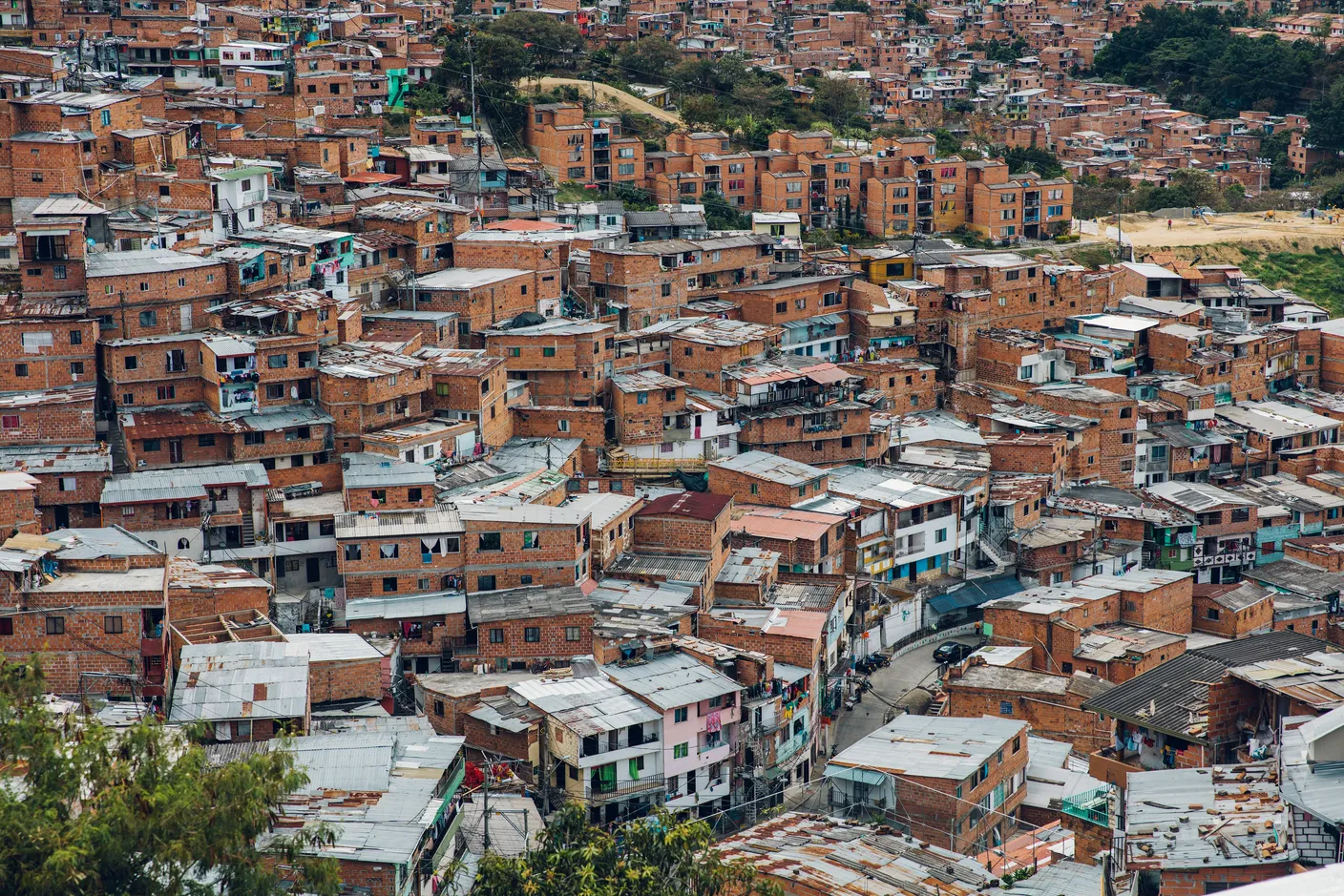 Medellín’s hillside comunas, served by Metrocable lines, define the city’s dramatic skyline.
Taxis and ride-hailing
Yellow taxis are metered and plentiful; the minimum fare is COP 8,300 (about USD 3) in 2026. Make sure the meter is running (“con taxímetro, por favor”) and carry small bills. Uber, DiDi, Cabify, and inDrive all operate, and inDrive lets you propose your own fare.
From José María Córdova airport, the regulated taxi fare to Medellín is COP 132,000 (about USD 41) in 2026, and the Combuses airport bus is far cheaper at COP 20,000 (about USD 6).
Walking
El Poblado, Laureles, and the area around the Botanical Garden are pleasant on foot in daylight. El Centro rewards walking between museums, but keep your phone out of sight and stay alert for pickpockets. The hills are steep, so use the metro or a taxi for longer distances, and take a ride after dark.
Essential Spanish Phrases
A few phrases go a long way with paisas, who appreciate the effort even when they switch to English:
- “¿Dónde está…?” (Where is…?)
For directions to metro stations, restaurants, or landmarks. - “¿Cuánto cuesta?” (How much is it?)
Essential at markets and food stalls. - “Con taxímetro, por favor” (With the meter, please)
For yellow taxis. - “No entiendo” (I don’t understand)
Opens the door to slower speech or gestures. - “¿Habla inglés?” (Do you speak English?)
Useful at hotels, tour desks, and tourist sites. - “Gracias” / “Por favor” (Thank you / Please)
Basic courtesy that locals notice and return.
Our guide to Spanish phrases for Colombia has many more.
Money Matters
Many small businesses, street vendors, and taxis prefer cash, so carry some pesos. Use ATMs inside malls or banks rather than street-side machines. Credit cards work at hotels, upscale restaurants, and chain stores. Tell your bank before you travel to avoid card blocks.
Currency tips
A few prices worth knowing in 2026:
| Expense | Cost |
|---|---|
| Metro ride, registered Cívica card | COP 3,820 (about USD 1.20) |
| Metro ride, visitor card | COP 4,400 (about USD 1.40) |
| Minimum taxi fare | COP 8,300 (about USD 3) |
| Airport bus (Combuses) | COP 20,000 (about USD 6) |
| Airport taxi to Medellín | COP 132,000 (about USD 41) |
For meals, daily budgets, and how to handle cards and ATMs, see our guide to how much a trip to Colombia costs.
Emergency Contacts
The number for all emergencies in Colombia is 123. It is free from any phone in the country, including a foreign phone on roaming, and you dial it as it is, with no +57 prefix.
See our full list of emergency contacts in Colombia, including embassy numbers and specialized lines.
The tourist police (Policía de Turismo) patrol the main visitor areas. Medellín has well-regarded private hospitals and clinics, such as Hospital Pablo Tobón Uribe, but foreign patients are usually asked to pay up front, so travel insurance is strongly recommended.
What’s Next?
Once you have settled in, this first-day plan balances orientation with some of Medellín’s best introductions:
| Activity | Estimated time | Notes |
|---|---|---|
| Metro and Metrocable Line K | 2 to 3 hours | Views over the valley from the cable car |
| Plaza Botero and Museo de Antioquia | 2 hours | The sculptures in the plaza are free to see |
| Lunch in Laureles or El Poblado | 1 hour | Try bandeja paisa or arepas |
| Botanical Garden | 1 to 2 hours | Free, next to Universidad station |
| Evening in Laureles or El Poblado | 2 hours | A salsa bar, or dinner in Provenza |
Plan at least four days for Medellín; a week allows day trips to Guatapé or the coffee towns of southwest Antioquia.
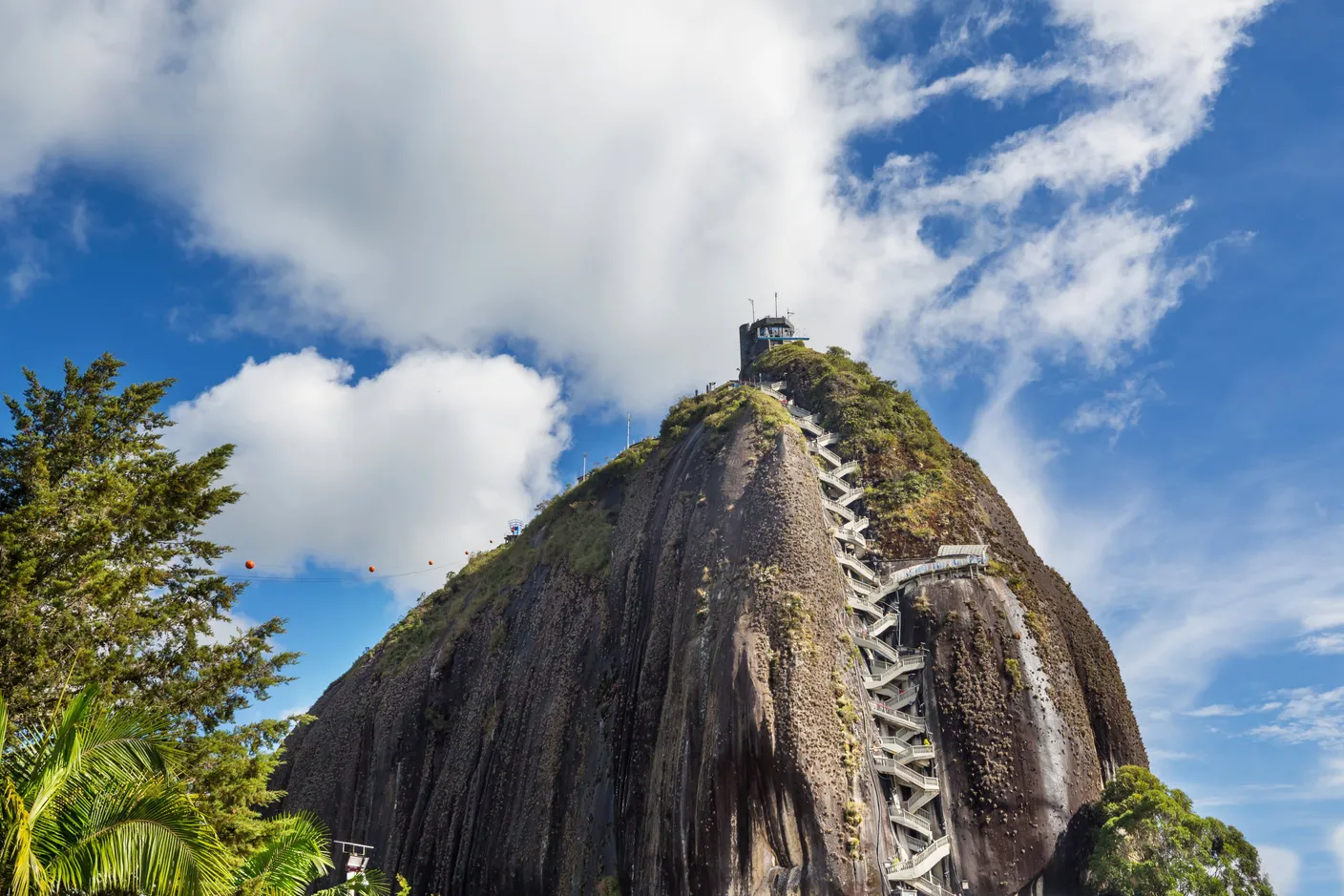 Guatapé, two hours from Medellín, is the most popular day trip from the city.
Pace yourself, try some Spanish, and treat the city as a living community rather than a checklist of sights.
Sources
- DANE: population projections (2026 projection for Medellín)
- El Tiempo: Medellín metro fares for 2026 (January 9, 2026)
- Semana: Cable Arví (Line L) hours and fares (checked October 1, 2026)
- Infobae: Medellín taxi fares for 2026 (January 31, 2026)
- El Colombiano: Combuses airport bus fare for 2026 (checked October 1, 2026)
- Metro de Medellín