
Updated
On this page
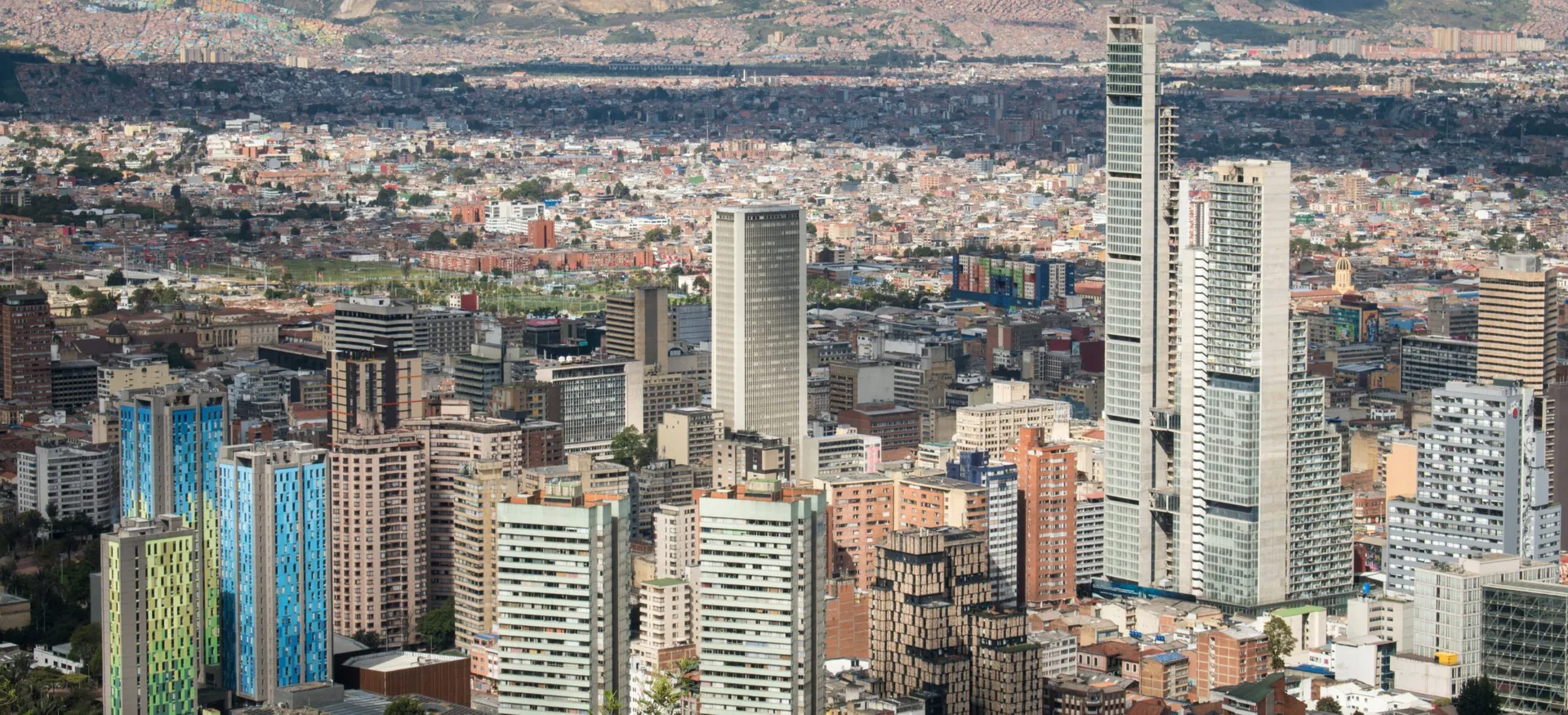
Bogotá spreads across a high plateau in the Andes, at about 2,600 meters (8,500 feet), with the green wall of the Eastern Hills along one side. Nearly eight million people live here, in a city where colonial churches stand a few blocks from glass towers and a museum of pre-Hispanic gold sits beside the street art of La Candelaria.
It is not the Colombia of beaches and palm trees. Bogotá is cool, often rainy, and busy, and it takes a day or two to adjust to the altitude. In return it offers the country’s best museums, one of South America’s most interesting food scenes, and neighborhoods with very different characters, from the colonial center to the restaurant streets of the north.
This page is the overview. For the practical detail, see the essential guide for first-time visitors, where to stay, getting around, and 15 things to do.
A City of Contrasts
Bogotá rewards visitors who take their time. In La Candelaria, centuries-old churches stand alongside some of the city’s best street art. The Gold Museum and the Botero Museum are a short walk apart. In the north, Zona G and the Zona T offer some of the best dining and nightlife in the country, and on Sundays, much of the city closes its main roads to cars and takes to bicycles.
A Glimpse into Bogotá’s Past
Bogotá’s story begins long before the Spanish arrived, when the plateau was home to the Muisca people, whose gold offerings inspired the legend of El Dorado. After the Spanish conquest in the 16th century, Santa Fe de Bogotá, as it was then called, became the administrative center of the New Kingdom of Granada. Its historic core, La Candelaria, still preserves much of its colonial architecture in narrow streets and colorful facades.
After independence from Spain, declared in 1810, Bogotá became the capital of the new republic. Today it is Colombia’s center of government, business, and culture.
Must-See Attractions
Bogotá has more to see than one visit can hold; our list of 15 things to do in Bogotá goes further. These are the essentials.
Museo del Oro (Gold Museum)
Run by Colombia’s central bank, the Banco de la República, the Gold Museum holds one of the world’s great collections of pre-Hispanic goldwork: tens of thousands of gold and metal objects, alongside ceramics, stone, and textiles from the cultures that made them. The displays explain how these societies worked metal and what the objects meant to them, which makes it the best introduction to Colombia’s history before the Spanish. Entry is free on Sundays; our essential guide has the current prices and hours.
Plaza Bolívar
The heart of the historic district is ringed by the neoclassical Catedral Primada, the Capitolio Nacional (home to Colombia’s Congress), and the Palacio de Justicia. Street vendors, performers, and flocks of pigeons make it a lively place by day. It is also crowded, so keep your phone and wallet out of sight.
Cerro de Monserrate
For the best view of the city, ride the cable car (teleférico) or the funicular up to Monserrate, at 3,152 meters (10,341 feet), where a sanctuary that has drawn pilgrims since the 17th century sits on the summit. Leave it until you have spent two or three days in Bogotá: the summit is about 500 meters higher than the city, and you will feel it.
You can also walk up the stone trail. It is open Wednesday to Monday, from 5:00 AM to 1:00 PM for the climb, with the descent allowed until 4:00 PM, and it is closed on Tuesdays for maintenance. It is not open to children under one meter tall, pregnant women, or people over 75. The climb is steep and hard work at this altitude. Go early in the morning, when the trail is busiest, walk with company, and keep valuables to a minimum. If you are not used to the altitude yet, take the cable car or funicular instead.
Botero Museum
The Botero Museum is free, a condition Fernando Botero set when he donated the collection in 2000. It holds over a hundred of his own paintings, drawings, and sculptures, with their famously rounded figures, along with works from his personal collection by Picasso, Monet, Dalí, and other international artists.
Paloquemao Market
For a look at everyday Bogotá, visit this busy wholesale market where locals buy fresh produce, flowers, and meat. It is mainly a working market, but small food stalls serve traditional dishes, and it is a good place for an early breakfast and a first taste of fruits you have never seen before. Go in the morning, when the flower stalls are at their best, and keep your phone and wallet close in the crowded aisles.
Experiencing Bogotá’s Culture
Coffee Culture
Bogotá has a strong specialty coffee scene, particularly in Chapinero and Usaquén, where cafés serve beans from Colombia’s growing regions and many offer tastings that explain the differences between them. It is a good way to taste the range of Colombian coffee if you are not visiting the Coffee Region itself.
Street Art
Bogotá is one of South America’s street art capitals. Its walls carry everything from political commentary to large-scale murals by local and international artists. La Candelaria has the densest concentration, and guided graffiti walking tours explain the stories behind the work, which is the easiest way to see it and a lower-risk way to explore the area on a first visit.
Ciclovía
Every Sunday and public holiday, from 7:00 AM to 2:00 PM, Bogotá closes over 140 kilometers of its main roads to cars for the Ciclovía. According to the district recreation institute (IDRD), which runs it, more than 1.5 million people use it each week to cycle, run, skate, or walk. Bike rental stands, juice sellers, and outdoor exercise classes line the routes, and it is one of the best ways to see the city the way its residents do.
Practical Information For Bogotá
Weather
Bogotá’s altitude keeps it cool all year, with an average temperature of around 13°C (55°F). Mornings are fresh, sunny afternoons can feel warm, and evenings are cold. It can rain in any month, but April to May and October to November are usually the wettest, and December to February the driest. Pack layers and a rain jacket whenever you visit. The essential guide has more.
Getting Around
Bogotá has an extensive public transport network, but it can be hard for visitors to navigate at first. Our guide to getting around Bogotá covers TransMilenio, taxis and ride-hailing apps, the airport, cycling, and walking, including the lower-risk ways to get around at night.
Safety Considerations
Risk in Bogotá varies by neighborhood and by time of day. The historic center is busiest and most heavily policed during daylight hours and calls for more caution after dark. The UK Foreign, Commonwealth and Development Office notes that British nationals have been robbed at gunpoint in the La Candelaria area, so keep valuables out of sight there even in the middle of the day. We set out what four governments currently advise about Colombia, each advisory dated and quoted, and our Safety Guide for Colombia covers the everyday precautions.
Accommodation
Bogotá has lodging for every budget, from international hotels to small guesthouses. For guidance on the lower-risk and most convenient neighborhoods for visitors, see our complete Where to Stay in Bogotá guide.
Altitude Adjustment
At about 2,600 meters above sea level, many visitors feel the altitude on arrival, usually as a headache, tiredness, or poor sleep for the first day or two. Take it easy at first, drink water, and go easy on alcohol for the first 48 hours. The essential guide explains the symptoms to watch for, and what to know about coca tea before you try it.
Modern Metropolis
Bogotá’s northern districts show a completely different side of the city from its historic center, with glass towers and contemporary architecture. The Zona T (also called the Zona Rosa) and Parque 93 are the city’s upscale social and commercial hubs, with:
- Andino Shopping Center: a modern mall with international brands and Colombian designers
- El Retiro Shopping Center: known for its luxury boutiques
- Parque 93: a leafy park ringed by restaurants and bars that come alive at night
The financial district around Calle 72 is home to many national and international companies, banks, and corporate headquarters.
For striking modern architecture, visit the Biblioteca Virgilio Barco, a public library designed by the Colombian architect Rogelio Salmona, with curved red-brick walls and surrounding water features that are typical of his work.
These northern districts are among the city’s lower-risk areas for an evening out, which makes them a comfortable base for travelers who want to dine and go out late. Even here, take a taxi or app ride between venues at night rather than walking quiet side streets.
Natural Surroundings
For a sprawling city, Bogotá stays close to nature. Its eastern edge is framed by the steep, forested slopes of the Eastern Hills, which make a dramatic backdrop to city life.
The most famous of them is Monserrate. At the summit, besides the sanctuary, you will find:
- Gardens and walking paths with native plants and flowers
- Restaurants serving traditional Colombian food with views over the city
- Stalls selling local crafts and snacks
Within the city, the Bogotá Botanical Garden (Jardín Botánico José Celestino Mutis) displays Colombian plants organized by ecosystem, from páramo to rainforest. Its orchid collection is a highlight in a country with one of the richest orchid floras in the world.
Simón Bolívar Metropolitan Park, often compared to New York’s Central Park, has lakes, sports fields, and open lawns, and hosts large outdoor concerts and festivals. On weekends it is a good place to see how Bogotá residents spend their free time.
Culinary Capital
Bogotá’s food scene has grown into one of the most interesting in South America, from street food to tasting menus.
For traditional Bogotá cooking, try:
- Ajiaco: a hearty soup of three kinds of potato, corn, chicken, and the herb guasca, served with cream, capers, and avocado
- Chocolate completo: hot chocolate served with cheese for dipping, bread, and butter, a classic Bogotá breakfast
- Tamales: rice, meat, and vegetables wrapped in plantain leaves and steamed
- Fritanga: a platter of grilled meats and sausages, usually with small potatoes and corn
Many of the city’s most ambitious restaurants are in Zona G and the surrounding streets of Chapinero. The best known is Leo, where the chef Leonor Espinosa builds tasting menus around ingredients from across Colombia’s regions and its biodiversity.
For an everyday lunch, look for a corrientazo, a small restaurant serving a set menu at a modest price. It usually includes soup, a main plate with rice, beans or lentils, plantain, and salad, and a juice or small dessert.
Beyond Bogotá
After exploring the capital, consider a trip out of the city:
- Zipaquirá Salt Cathedral: an underground church carved into the tunnels of a salt mine, about an hour to an hour and a half north of Bogotá depending on traffic
- Villa de Leyva: a beautifully preserved colonial town with cobblestone streets and whitewashed buildings, about three to four hours away
- La Chorrera Waterfall: often described as Colombia’s tallest waterfall, in cloud forest on the far side of the Eastern Hills, about two hours from the city
Final Thoughts
Bogotá rewards those who look past first impressions. It does not have the beaches of Cartagena or the spring-like climate of Medellín, but it has a cultural depth that reveals itself to travelers who give it a few days.
Allow time to adjust to the altitude and the pace, and you will find a complex, creative city that brings together Colombia’s indigenous heritage, colonial history, and contemporary energy.
Looking for more detail on Bogotá? See our guides on how to get around Bogotá, where to stay in Bogotá, and Bogotá’s most essential experiences.
Sources
- Museo del Oro: Banco de la República (checked October 1, 2026)
- Museo Botero: Banco de la República (checked October 1, 2026)
- Cerro de Monserrate: hours and trail (checked October 1, 2026)
- Sendero de Monserrate: IDRD, Bogotá’s district recreation and sports institute (checked October 1, 2026)
- Ciclovía: IDRD (checked October 1, 2026)
- UK FCDO: Colombia travel advice, safety and security (checked October 1, 2026)
- DANE: population projections
- Bogotá: Colombia’s official tourism site
- Bogotá: Wikipedia