
Updated
On this page
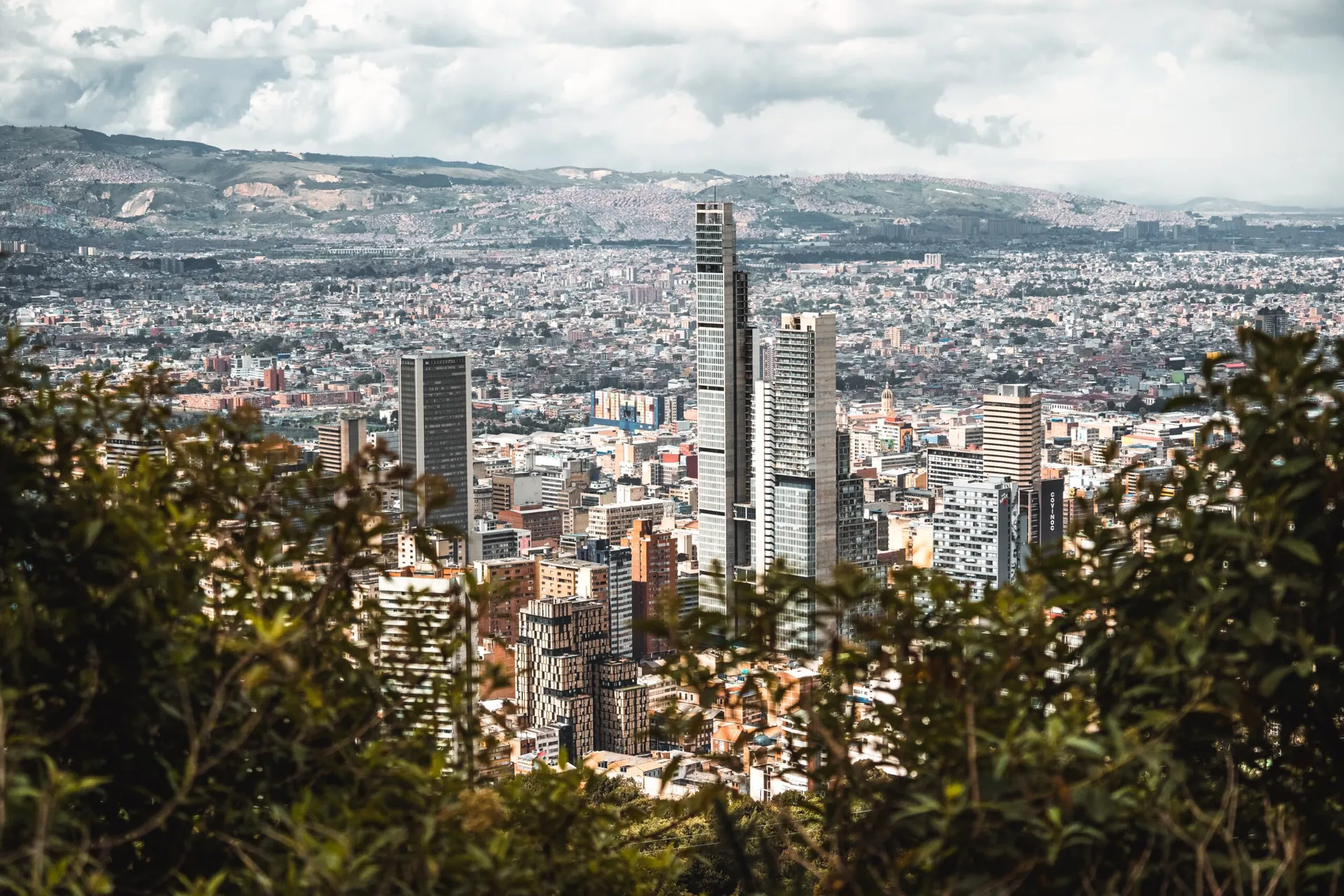
Centuries-old churches stand a few blocks from glass towers, street art covers the walls of the colonial center, and on Sunday mornings the city closes its main roads to cars and takes to bicycles. This is Bogotá, Colombia’s capital: a city of nearly eight million people on a high Andean plateau, with the country’s best museums and a coffee culture to match.
These are 15 experiences that show the city at its best. Hours and prices were checked on October 1, 2026, but they change, so confirm before you go.
1. Explore La Candelaria’s Colonial Streets
La Candelaria is the historic heart of Bogotá, where the city was founded in 1538: colorful colonial houses, cobblestone streets, and a bohemian mix of museums, cafés, and street art.
Location: La Candelaria, downtown Bogotá, reached by TransMilenio at Las Aguas or Museo del Oro stations
Don’t Miss: the Chorro de Quevedo, a small square traditionally said to mark the city’s founding site; La Puerta Falsa, a tiny restaurant serving tamales and hot chocolate since the early 19th century; and the murals on almost every street
Tip: Join a walking or graffiti tour to learn the history behind the street art. Daylight is the lower-risk time to go; keep valuables out of sight, and take a taxi or app ride back in the evening rather than walking the emptying streets.
2. Visit the Gold Museum (Museo del Oro)
The Banco de la República’s Gold Museum holds one of the world’s great collections of pre-Hispanic goldwork, tens of thousands of objects that tell the story of the cultures that made them. More information at the Museo del Oro’s official website.
Location: Carrera 6 #15-88, on Parque Santander
Hours: Tuesday to Saturday 9:00 AM to 7:00 PM; Sundays and holidays 10:00 AM to 5:00 PM; last entry one hour before closing; closed Mondays, including holiday Mondays
Cost: COP 21,000 (about USD 7) for foreign visitors; free for everyone on Sundays
Tip: Between October 6 and November 6, 2026, parts of the permanent galleries close intermittently for renovation, so check the museum’s site before you go. Sundays are free but busy; a weekday morning is quieter.
3. Take the Funicular to Monserrate
Monserrate rises to 3,152 meters (10,341 feet) above the city, with the sanctuary of El Señor Caído (The Fallen Lord) on the summit, gardens, restaurants, and the best view of Bogotá.
Location: Cable car and funicular station, on the eastern edge of the city center, at Carrera 2 Este with Calle 21
Hours:
- Cable car and funicular: Monday to Saturday 6:30 AM to 10:00 PM; Sundays 5:30 AM to 5:00 PM; holidays 6:30 AM to 5:00 PM
- Walking trail: Wednesday to Monday, 5:00 AM to 1:00 PM to go up, and until 4:00 PM to come down; closed Tuesdays
Cost:
- Cable car or funicular: COP 35,000 (about USD 11) round trip, Monday to Saturday and holidays; COP 21,000 (about USD 7) round trip on Sundays. Buy tickets through the official site.
- Walking trail: free. It is not open to children under one meter tall, pregnant women, or people over 75.
Tip: Leave Monserrate until you have spent two or three days at Bogotá’s altitude. Go on a clear morning for the best views. If you walk up, go early, when the trail is busiest, with company, and allow about an hour to an hour and a half of steep climbing; otherwise ride up and enjoy the view without the effort.
4. Admire Art at the Botero Museum
This free museum holds one of Latin America’s most important collections of international art: more than a hundred works by Fernando Botero, famous for his rounded, “voluminous” figures, alongside the pieces he collected by Picasso, Monet, Dalí, and other masters.
Location: Calle 11 #4-41, La Candelaria
Hours: Monday, and Wednesday to Saturday, 9:00 AM to 7:00 PM; Sundays and holidays 10:00 AM to 5:00 PM; closed Tuesdays; last entry one hour before closing
Cost: Free
Tip: Free guided tours in English run on Fridays, Saturdays, Sundays, and holidays at 3:00 PM, covering the Botero Museum and its neighbors in the same block, the Museo de Arte Miguel Urrutia (MAMU) and the Casa de Moneda.
5. Shop at Paloquemao Market
See everyday Bogotá at its biggest food market, with stalls of tropical fruits, vegetables, meat, and fish, and a flower section that is spectacular early in the morning.
Location: Avenida Calle 19 with Carrera 25 (Paloquemao)
Tip: Go early, before about 10:00 AM, when the flower stalls are at their best and locals do their shopping. Try fruits such as lulo, feijoa, and guanábana at the juice stands. The aisles are crowded, so keep your phone and wallet in a front pocket.
6. Ride Bicycles During Ciclovía
Every Sunday and public holiday, from 7:00 AM to 2:00 PM, Bogotá closes over 140 kilometers of main roads to cars. According to the district recreation institute (IDRD), more than 1.5 million people use it each week to cycle, run, skate, and walk.
Location: Across the city, including long stretches of Carrera 7
Cost: Free; bike rental stands operate along some routes
Tip: Combine the Ciclovía with the Usaquén flea market on a Sunday for a full local day out.
7. Visit the Botanical Garden (Jardín Botánico)
The José Celestino Mutis Botanical Garden displays Colombian plants by ecosystem, from Andean forest and páramo to a tropical greenhouse (the Tropicario), with collections of orchids, palms, and medicinal plants. Official website.
Location: Avenida Calle 63 #68-95, next to Simón Bolívar Park
Hours: Tuesday to Friday 8:00 AM to 5:00 PM; Saturdays, Sundays, and holidays 9:00 AM to 5:00 PM; closed on Mondays (on Tuesday when Monday is a holiday)
Cost: COP 38,000 (about USD 12) for foreign visitors, including the Tropicario
Tip: Combine it with a walk in Simón Bolívar Park, next door, for a day outdoors.
8. Tour the Catedral de Sal (Salt Cathedral) in Zipaquirá
A church built inside the tunnels of a salt mine, 180 meters underground, with dramatic lighting, carved crosses, and vast chambers. More information and tickets at the official website.
Location: Zipaquirá, about 50 kilometers north of Bogotá
Hours: Daily, 9:00 AM to 4:40 PM
Cost: Foreign visitors pay an international rate, higher than the national one. The basic ticket includes entry and an audio guide; check current prices on the official site.
Getting There:
- Tourist train: the Tren Turístico de la Sabana runs on Saturdays, Sundays, and holidays, leaving from the west side of the Gran Estación shopping center at 8:45 AM, with a second pickup in Usaquén at 9:15 AM, and returning in the late afternoon. It no longer departs from La Sabana station.
- Bus: buses to Zipaquirá leave from the Portal Norte TransMilenio station; allow about an hour and a half.
- Organized tours from Bogotá.
Tip: If you travel independently, arrive early to stay ahead of the tour groups.
9. Experience Andrés Carne de Res
More than a restaurant, Andrés Carne de Res is a Colombian institution: a sprawling, wildly decorated steakhouse that turns into a party, with dancing and theatrical performances. Official website.
Location: The original in Chía, about 30 minutes to an hour north of Bogotá depending on traffic, or Andrés D.C. in the Zona Rosa (Calle 82 #12-21)
Hours: Vary by location; the Chía original is liveliest from Friday to Sunday
Tip: The Chía original is the full experience but needs transport planning: book a ride there and back rather than looking for a taxi late at night. Andrés D.C. in the city is easier to reach, and still a big night out.
10. Stroll Through Usaquén
Once a separate town and now an upscale neighborhood in the north, Usaquén keeps its colonial square, whitewashed church, and restaurants in restored houses.
Location: Around Carrera 6A with Calle 119
Market Hours: The Mercado de las Pulgas de Usaquén runs on Saturdays, Sundays, and holiday Mondays, 9:00 AM to 5:30 PM
Tip: Visit on a weekend for the market, or on an evening later in the week for the neighborhood’s restaurants.
11. Get Cultured at the National Museum
Housed in a former prison, the Museo Nacional, founded in 1823, is Colombia’s oldest museum. Its collection runs from pre-Hispanic archaeology through colonial art to the present day. More information at the Museo Nacional’s official website.
Location: Carrera 7 #28-66
Hours: Tuesday to Sunday, 9:00 AM to 5:00 PM; closed Mondays, including holiday Mondays
Cost: COP 15,000 (about USD 5) for adult foreign visitors, plus a voluntary contribution; free on Wednesdays from 2:00 PM and all day on the last Sunday of each month
Tip: Plan for two hours, and go on a Wednesday afternoon if you want free entry.
12. Visit Simón Bolívar Park
Bogotá’s answer to Central Park: a huge green space with a lake, sports fields, and lawns, and the venue for many of the city’s biggest concerts and festivals. On weekends it shows how Bogotá residents spend their free time.
Location: Simón Bolívar Park, between Calle 53 and Calle 63 and Carrera 68 and Avenida Esmeralda
Cost: Free entry
Tip: Check the city’s events calendar before you go, since the park hosts large free festivals such as Rock al Parque and Jazz al Parque.
13. Learn at the Maloka Interactive Museum
A science and technology center with hands-on exhibits on the human body, nature, physics, and space, and a dome cinema. It is a good choice for families and for rainy afternoons. Tickets and details on the official website.
Location: Carrera 68D #24A-51
Hours: Monday to Friday 11:00 AM to 5:00 PM; Saturdays, Sundays, and holidays 9:30 AM to 6:00 PM; ticket sales end at 4:00 PM
Cost: Varies by the exhibits and shows you choose; free for children under 4 and visitors over 60
Tip: Check the dome cinema schedule when you buy tickets.
14. Discover Graffiti in the Distrito Grafiti
Street art covers walls all over Bogotá, but the Distrito Grafiti in Puente Aranda is an open-air gallery: a stretch of industrial walls painted by Colombian and international artists.
Location: Avenida de las Américas, between about Carrera 50 and Carrera 53, next to the Distrito Grafiti TransMilenio station
Tip: Go by day, and ideally with a graffiti tour, which explains the artists and the stories behind the work. It is an industrial area with few visitors, so do not linger after dark.
15. Day Trip to Villa de Leyva
Villa de Leyva is a beautifully preserved colonial town, with one of the largest cobblestone plazas in the Americas and streets of whitewashed houses. It is a long day trip, and better as an overnight stay.
Location: About 160 kilometers from Bogotá, around three and a half to four hours by road
Getting There:
- Buses from the Terminal Salitre, taking about four hours
- Organized tours, though an overnight stay lets you see the town without rushing
Tip: Combine it with nearby Ráquira, known for its pottery and crafts.
Practical Travel Tips for Bogotá
- Altitude awareness: At about 2,600 meters (8,500 feet), Bogotá’s altitude affects many visitors for a day or two. Take your first day easy, drink water, and go easy on alcohol for the first 48 hours. Our essential guide has more.
- Weather: Bogotá can see sunshine and a cold downpour on the same afternoon. Carry a light rain jacket and dress in layers.
- Getting around: Use TransMilenio for long trips outside rush hour, and ride-hailing apps or called taxis for shorter trips and always at night. Don’t hail taxis on the street. See our Bogotá transportation guide for details.
- Safety: risk varies by neighborhood and by time of day, so keep valuables out of sight, take a ride after dark, and ask your accommodation which nearby streets to avoid. Our safety guidelines cover the everyday precautions.
- Festivals: the Ibero-American Theater Festival (in even-numbered years, around March and April), the International Book Fair (late April to early May), and the free festivals in Simón Bolívar Park, such as Jazz al Parque, are worth planning around.
Sources
- Banco de la República: Gold Museum visitor information (checked October 1, 2026)
- Banco de la República: Botero Museum visitor information (checked October 1, 2026)
- Cerro de Monserrate: hours and prices (checked October 1, 2026)
- IDRD: Ciclovía (checked October 1, 2026)
- Jardín Botánico de Bogotá (hours and prices; checked October 1, 2026)
- Catedral de Sal de Zipaquirá (hours and depth; checked October 1, 2026)
- Tren Turístico de la Sabana (departure points and days; checked October 1, 2026)
- Mercado de las Pulgas de Usaquén (checked October 1, 2026)
- Museo Nacional de Colombia: hours and prices (checked October 1, 2026)
- Maloka: hours and prices (checked October 1, 2026)
- Visit Bogotá: Distrito Grafiti (location)