
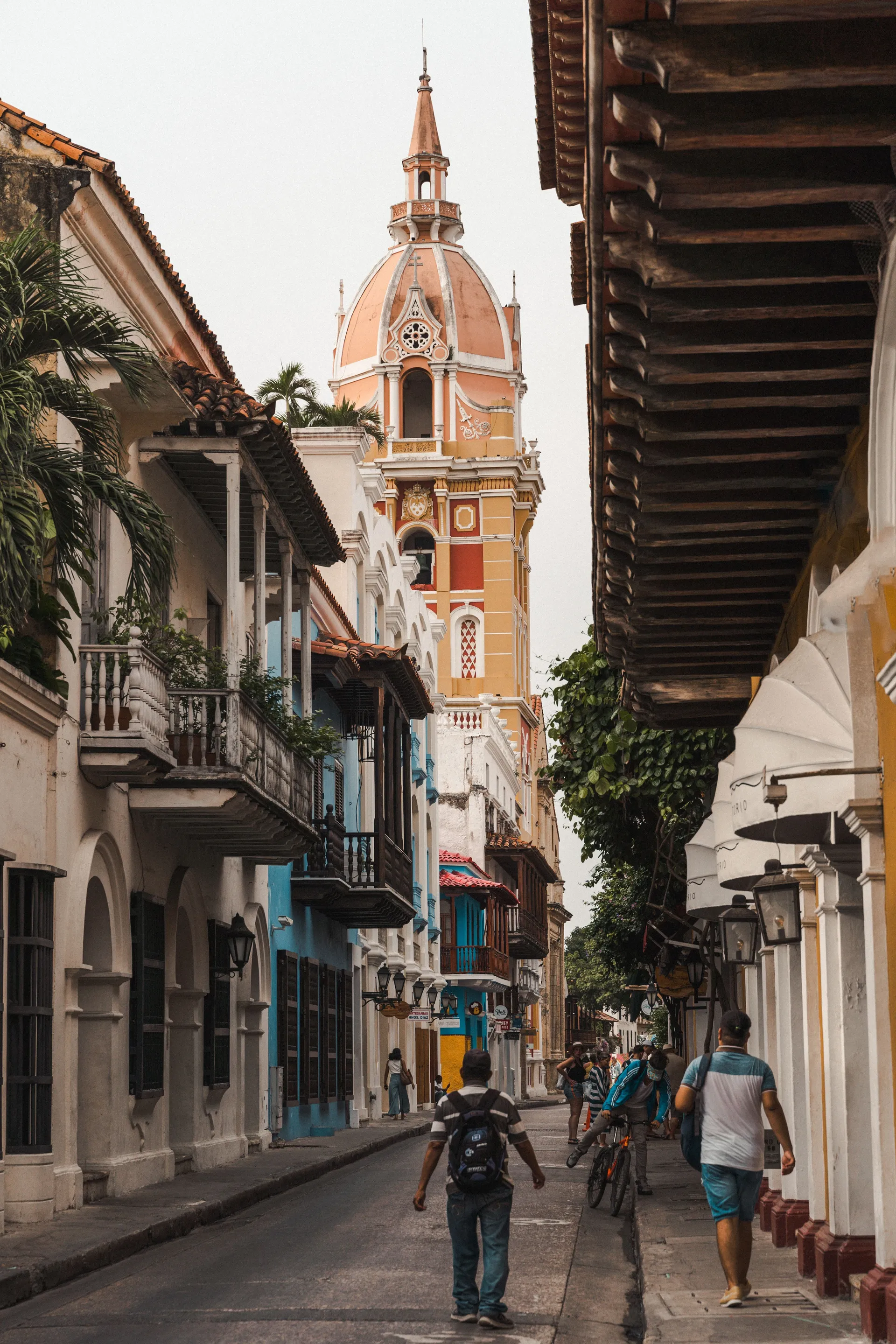
Cartagena is the most photographed city in Colombia and also the most argued about. Ask people who have traveled the country and you will hear that it is the highlight, that it is a theme park, that it is too hot to function, and that it is the one place you cannot miss. All of those are true from where the speaker stood.
So the useful question is not whether Cartagena is good. It is whether it suits the trip you are planning. Here is the case for it, the case against it, and how to get the best of it if you go.
What Cartagena Does That Nowhere Else Does
The walled city is the reason, and it is a real one. UNESCO inscribed Cartagena’s port, fortresses, and monuments as a World Heritage Site in 1984, describing it as having the most extensive and one of the most complete systems of military fortifications in South America. That is not tourism-board language. The walls, the bastions, and the forts around the bay were built over the sixteenth to eighteenth centuries to protect one of the most important ports in the Spanish Caribbean, and most of them are still standing.
Inside them is a compact grid of streets lined with balconied houses, churches, and plazas that you can walk end to end in well under an hour. It is small enough to learn in a day and dense enough that you keep finding something new on the third. Nothing else in Colombia is like it. Bogotá’s La Candelaria and the colonial towns of Boyacá and Santander have their own beauty, but none has the scale or the setting of a fortified port on the Caribbean.
Three things lift it above a pretty old town:
- The fortifications themselves. The Castillo San Felipe de Barajas, on a hill just outside the walls, is the largest of the Spanish forts. Entry for foreign visitors is COP 38,000 (about USD 12) at the 2026 rate, and it opens daily from 7:00 a.m. to 6:00 p.m. Go at opening, before the heat.
- Getsemaní. The neighborhood just outside the walls, once the working quarter, is where much of the city’s street life now happens: murals, small plazas, music, and food stalls in the evening. It is also where many visitors choose to stay.
- The evenings. The walled city changes after sunset. The heat drops, the plazas fill with Cartageneros as well as visitors, and walking the top of the walls at dusk is free and is one of the best things you can do in Colombia.
What Puts People Off
The criticisms are real too, and it is better to know them before you book than to discover them on arrival.
The heat. Cartagena is hot all year, with an average temperature of around 27°C, and the humidity makes the middle of the day hard work in the stone streets. Visitors who plan full days of sightseeing tend to wilt by noon. The city rewards early mornings, a long break in the afternoon, and evenings out, which is how people who live there organize the day.
The cost. Cartagena is expensive by Colombian standards. Rooms and restaurants inside the walls are priced for international visitors, and a trip that felt inexpensive in Medellín or the Coffee Region can feel very different here. Getsemaní, Manga, and the neighborhoods outside the walls bring that down considerably. Our guide to where to stay in Cartagena compares the areas by budget.
The selling. The walled city is the most tourist-oriented place most visitors to Colombia will go, and it comes with a lot of selling: hats, tours, boat trips, photos, and offers you did not ask for. Most of it is persistent rather than aggressive, and a polite, firm no, gracias without stopping usually ends it. Agree prices before accepting anything, including a photo with one of the palenqueras, the fruit sellers in bright dresses.
The crowds. On days when cruise ships are in port, the walled city is noticeably busier in the middle of the day. Our post on the cruise season has the context. If you can, keep your walled-city mornings for days without a ship, or simply go early and late.
The beaches. The city’s own beaches, mainly along Bocagrande, are not why anyone comes. The clearer water is a boat ride away, in the Rosario Islands, which sit inside a national park, or at Playa Blanca on Barú. If beaches are the point of your trip, Cartagena is the place you leave from, and the Cartagena guide covers the options.
Who Should Go, and Who Might Skip It
Go if it is your first trip to Colombia, if colonial architecture and history interest you, if you want a few days of evenings out in a beautiful setting, or if you are traveling the Caribbean coast anyway. It also works well as an easy start or end to a trip, since it has direct international flights, and its tourism infrastructure makes it a gentle introduction to the country for anyone nervous about arriving without Spanish.
Consider skipping it, or keeping it short, if your budget is tight, if heat genuinely makes you miserable, or if what you want from Colombia is the places with few other foreigners. Cartagena is the opposite of off the beaten path, and it does not pretend otherwise. If what draws you is colonial architecture at a slower pace, Villa de Leyva, in the highlands north of Bogotá, gives you whitewashed streets and a vast cobbled plaza in a cooler climate, without the walls or the sea.
The worst reason to skip Cartagena is that someone told you it is “too touristy.” It is touristy because it is extraordinary, and the crowds are concentrated in a small area at predictable hours. Step two streets away from the main plazas, or go out at seven in the morning, and you will often have a street to yourself.
How Long to Stay
Two or three nights is right for most people. That is enough for the walled city, Getsemaní, the Castillo San Felipe, an evening on the walls, and a museum or two, at a pace that allows for the heat.
Add a day or two for the water: a boat trip to the Rosario Islands or Barú, or a visit to San Basilio de Palenque, the town founded by people who escaped slavery, whose culture UNESCO recognized in 2005. Our top things to do in Cartagena has more.
Longer than a week suits people who want a beach base or are working remotely, and at that point staying outside the walled city makes more sense on cost and on noise.
When to Go
The timing matters more here than in most of Colombia. According to IDEAM, Colombia’s weather and climate institute, Cartagena’s dry season runs from December to April, when the trade winds are steady and rain is rare, and its rainy season from May to November, with October usually the wettest month. A wet-season trip is still a trip, with plenty of dry hours, but heavy downpours can flood streets in parts of the city, so build some slack into the days.
The catch is that the dry months are also the busiest and most expensive, peaking over Christmas, New Year, and Easter. Late January to March often balances the two. Our best time to visit Colombia covers the whole country by month.
Is It Safe?
We do not issue safety verdicts on any place. What we can tell you is what the governments say. As of October 7, 2026, the UK FCDO advises against all but essential travel to “the southern part of Bolívar Department,” the department Cartagena belongs to, but does not name Cartagena itself, which sits on the coast at the department’s northern end. Our Is Colombia Safe? page sets out all four advisories we track, attributed and dated, and those same advisories describe street crime, drink spiking, and scams in Colombia’s cities, Cartagena included.
In practical terms, the busy, well-lit parts of the walled city and Getsemaní in the evening are where most visitors spend their time. Late at night, take a taxi rather than walking back through empty streets, keep your phone out of sight in crowds, and decline drinks and invitations from people you have just met.
The Verdict
Cartagena is worth visiting for most people on a first trip to Colombia, for the same reason a first trip to Italy probably includes Venice: there is nowhere else like it, and the crowds are the price of that. Go in the drier months if you can, stay two or three nights, organize your days around the heat, sleep somewhere that fits your budget, and use the evenings. Then leave for the rest of the coast, or the rest of the country, which is a different Colombia again.
If you are building the trip now, start with our Cartagena guide and the complete Cartagena travel guide, and use getting around Cartagena for the airport and taxis.
Prices and seasons checked October 7, 2026.
Sources
- UNESCO World Heritage Centre: Port, Fortresses and Group of Monuments, Cartagena
- Fortificaciones de Cartagena: Castillo San Felipe de Barajas, hours and 2026 rates
- Cartagena Cómo Vamos: the city’s rainy and dry seasons, citing IDEAM
- UK FCDO: Colombia travel advice, warnings and insurance (updated October 6, 2026; checked October 7, 2026)
- UNESCO Intangible Cultural Heritage: the cultural space of Palenque de San Basilio
Frequently Asked Questions
Is Cartagena worth visiting?
For most first-time visitors to Colombia, yes. UNESCO describes its fortifications as the most extensive and one of the most complete in South America, and there is nothing else like its walled city in the country. It is also hot, expensive by Colombian standards, and the most tourist-oriented place most visitors will go. Two or three nights, timed for the drier months, gets the best of it.
How many days do you need in Cartagena?
Two or three nights covers the walled city, Getsemaní, and the Castillo San Felipe at an unhurried pace. Add a day for a boat trip to the Rosario Islands or Barú if you want beaches, since the city's own beaches are not the reason to come.
What is the best time of year to visit Cartagena?
December to April is the dry season, with the steadiest trade winds and the least rain. It is also the busiest and most expensive period. The rains run from May to November, and October is usually the wettest month.
Is Cartagena expensive?
By Colombian standards, yes, especially for rooms and restaurants inside the walled city. Staying in Getsemaní or outside the walls brings costs down considerably, and many of the best things in the city, walking the walls and the streets, cost nothing.