
Updated
On this page
Santa Marta is hot. Not pleasantly warm, not sea-breeze hot, but the kind of coastal heat that follows you indoors and makes the afternoon a negotiation. Minca is 45 minutes away and about ten degrees cooler, and that single fact explains most of its popularity.
The village sits at around 650 meters in the foothills of the Sierra Nevada de Santa Marta, an isolated massif that stands apart from the Andean chain and, by UNESCO’s account, rises to 5,775 meters just 42 kilometers from the coast. Minca is the first proper stop on that gradient: cloud forest, running water everywhere, coffee and cacao growing on the slopes, and more birds than almost anywhere you have been.
Getting There
Minca has no scheduled bus. What it has is a well-worn shared-transport system that works better than it sounds.
Colectivos and 4x4s leave from the Cootrasminca office at Santa Marta’s public market, going when they fill rather than on a timetable. The run takes 45 minutes to an hour on a road that is paved most but not all of the way, and the fare is a few thousand pesos, paid to the driver in cash. Cootrasminca does not publish a rate card, and the figures circulating online disagree with each other, so ask at the office rather than trusting a number you read in advance.
Mototaxis do the same trip for several times the colectivo fare, negotiated rather than fixed. They are faster and considerably less comfortable with luggage. Agree the price before you set off.
The important thing nobody mentions until you arrive: the village is not the destination for most accommodation. The good lodges and hostels are spread up the mountain on steep dirt tracks that ordinary cars cannot manage. You will need a jeep or a mototaxi from the village square to wherever you are sleeping, and that is a separate fare. Tell your accommodation which colectivo you are on and they will usually arrange the transfer.
Coming from further afield, Santa Marta’s Simón Bolívar airport has frequent domestic flights, and our guide to things to do in Santa Marta covers using the city as a base for the whole region.
What There Is to Do
The waterfalls and swimming holes. Pozo Azul is the closest and busiest, a set of natural pools a walkable distance from the village, and it is at its best early before the day trippers arrive. The Marinka falls are the other standard outing, a pair of drops with a viewing area and a cafe. Cascada Perdida is quieter and further along the main road. All three are usually reached on foot or by mototaxi, and all three charge a small entry.
Coffee and cacao farms. The Sierra Nevada grows both, and Minca’s farms run tours that are noticeably more hands-on than the polished operations in the Coffee Region. La Victoria is the long-established coffee finca, still running nineteenth-century machinery. Several cacao farms take visitors through the process from pod to bar. If you have already done a coffee tour in the Eje Cafetero, the cacao side is the more novel half here, and our coffee culture page covers how the two regions differ.
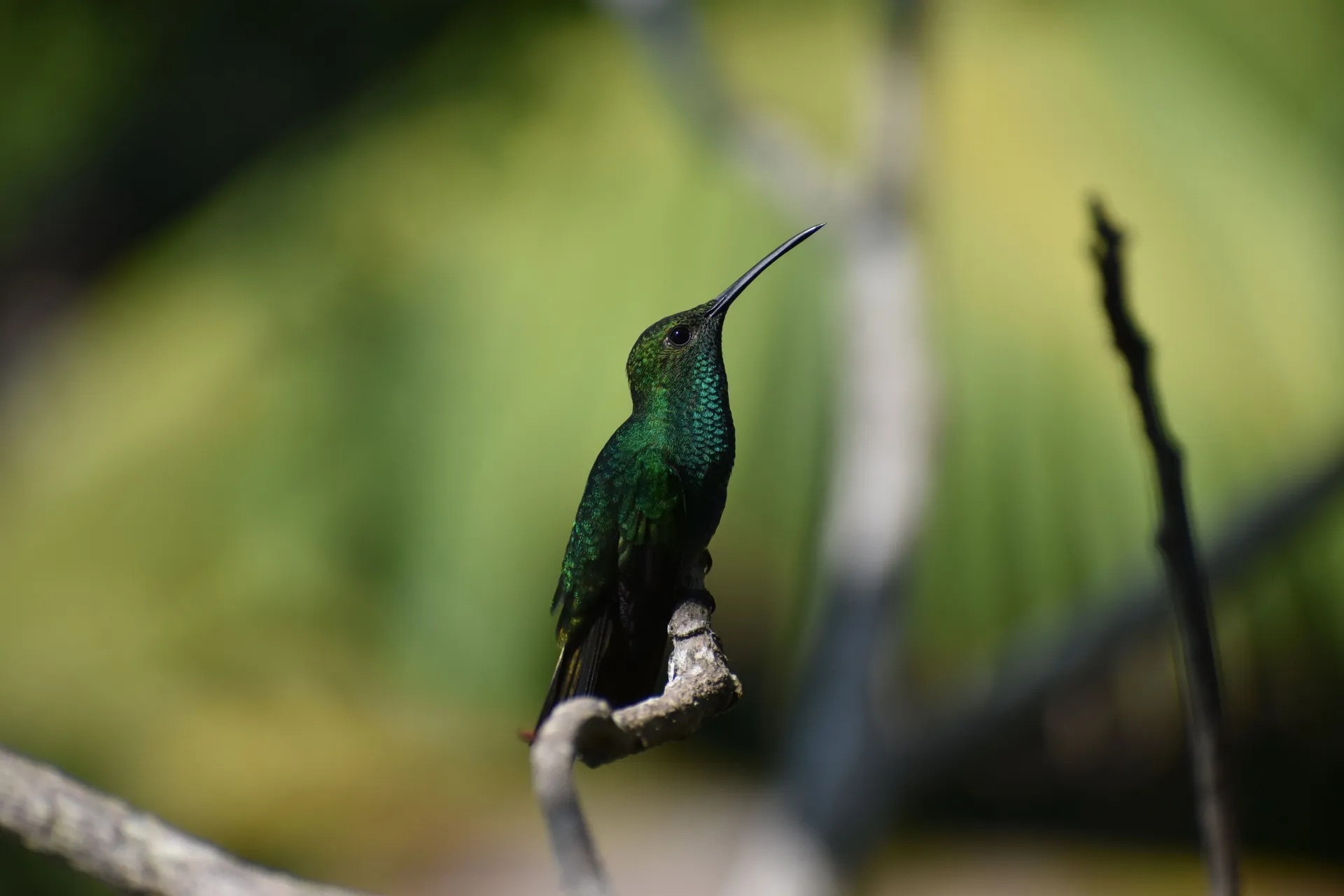
Birdwatching. This is Minca’s real distinction. The Sierra Nevada is an isolated massif, which makes it an endemism factory: species here exist nowhere else on earth. You do not need to be a birder to notice, but you do need a guide to get the most from it, and to be out at dawn. Our birdwatching page covers the wider Colombian picture and how to find a good guide.
The Cerro Kennedy hike. The serious walk. Cerro Kennedy, also called Los Pinos, is the ridge above Minca with views that on a clear morning run from the Caribbean to the snow peaks of the Sierra Nevada. It is a long climb, usually done as a pre-dawn start or split over two days with a night up top. Clear mornings are the whole point and they are not guaranteed, so build in flexibility. Our trekking and hiking page has the wider set of Colombian routes.
Doing nothing in a hammock. Minca’s hostels compete on views, and several have built terraces, pools, and oversized hammocks specifically for it. Some charge a day-visitor fee for non-guests, typically a small amount that includes use of the pool and a drink.
Where to Stay, and the Trade-Off Nobody Explains
The choice is altitude against convenience, and it matters more here than in most places.
In or near the village puts you walking distance from restaurants, the main waterfalls, and the colectivo stop. It is warmer, noisier, and easier.
Up the mountain is cooler, quieter, and has the views the photographs are selling. It also means a mototaxi every time you want dinner, and those tracks in heavy rain are genuinely rough. If you are staying high, plan to eat where you sleep.
Minca’s accommodation runs from backpacker hostels through mid-range eco-lodges to a handful of properly comfortable places, and it fills on weekends and Colombian public holidays. This has become a popular domestic destination, not just a gringo trail stop, so avoid weekends if you can and book ahead if you cannot.
Practicalities
- Bring cash. Minca is small, card acceptance is patchy, and ATMs are unreliable or absent. Draw pesos in Santa Marta before you come up. Our guide to money in Colombia covers why.
- Pack a layer. The point of Minca is that it is cooler. Evenings up the mountain are genuinely cool, and the cloud forest is damp.
- Waterproof something. It rains here, it rains hard, and the tracks turn to mud.
- Insect repellent. You are at 650 meters in wet forest.
- Shoes with grip. Waterfall paths are wet rock and clay.
- Connectivity is patchy the further up you go, which is either a problem or the point. Our notes on staying connected cover coverage generally.
How It Fits a Wider Trip
Minca pairs naturally with the rest of the Caribbean coast rather than standing alone. The standard sequence is Santa Marta as a base, then Minca for the mountains and Tayrona for the coast, with the Lost City trek for anyone with four or five days and the legs for it. Our one-week and two-week itineraries both show where it slots.
One honest note to finish on. Minca was a secret about fifteen years ago and it is not one now. There are more hostels, more mototaxis, and more people at Pozo Azul on a Sunday than the “sleepy mountain village” framing suggests. It is still a very good place to spend two nights. Go midweek, get up the mountain, and be out early.
Logistics checked September 2026. Shared transport fares here are cash, unposted, and move with fuel prices, so confirm the current fare locally rather than budgeting from any figure published online, ours included.
Sources
- UNESCO Man and the Biosphere Programme: Sierra Nevada de Santa Marta Biosphere Reserve, designated 1979
Frequently Asked Questions
How do you get from Santa Marta to Minca?
Shared colectivos and 4x4 jeeps run from the Cootrasminca office at Santa Marta's public market and take roughly 45 minutes to an hour. The colectivo is much the cheapest way up and you pay the driver in cash. Mototaxis run the same route for several times that, quoted per trip rather than fixed, so agree the price before you get on. There is no scheduled bus. Once you are in the village, most accommodation up the mountain needs a jeep or a mototaxi on top, because the roads are steep dirt.
Is Minca worth visiting?
It is the fastest way to swap Caribbean heat for cloud forest in Colombia. At around 650 meters, Minca is cool enough to sleep without air conditioning, and it packs waterfalls, swimming holes, coffee and cacao farms, and some of the most accessible birdwatching in the country into an area you can cover on foot and by mototaxi. It has also become genuinely popular, so it is not the undiscovered village it is sometimes sold as.
How many days do you need in Minca?
One night is enough for the waterfalls and a farm tour. Two nights lets you add a proper hike or a slow morning of birdwatching without rushing. If you want Cerro Kennedy, the high ridge above the village, allow an extra day, since it usually runs as a very early start or an overnight.
Can you do Minca as a day trip from Santa Marta?
Yes, and plenty of people do. You can see the main waterfalls and have lunch in the village comfortably in a day. What you lose is the part most people remember, which is the temperature drop after dark, the noise of the forest at night, and the birds at first light.