
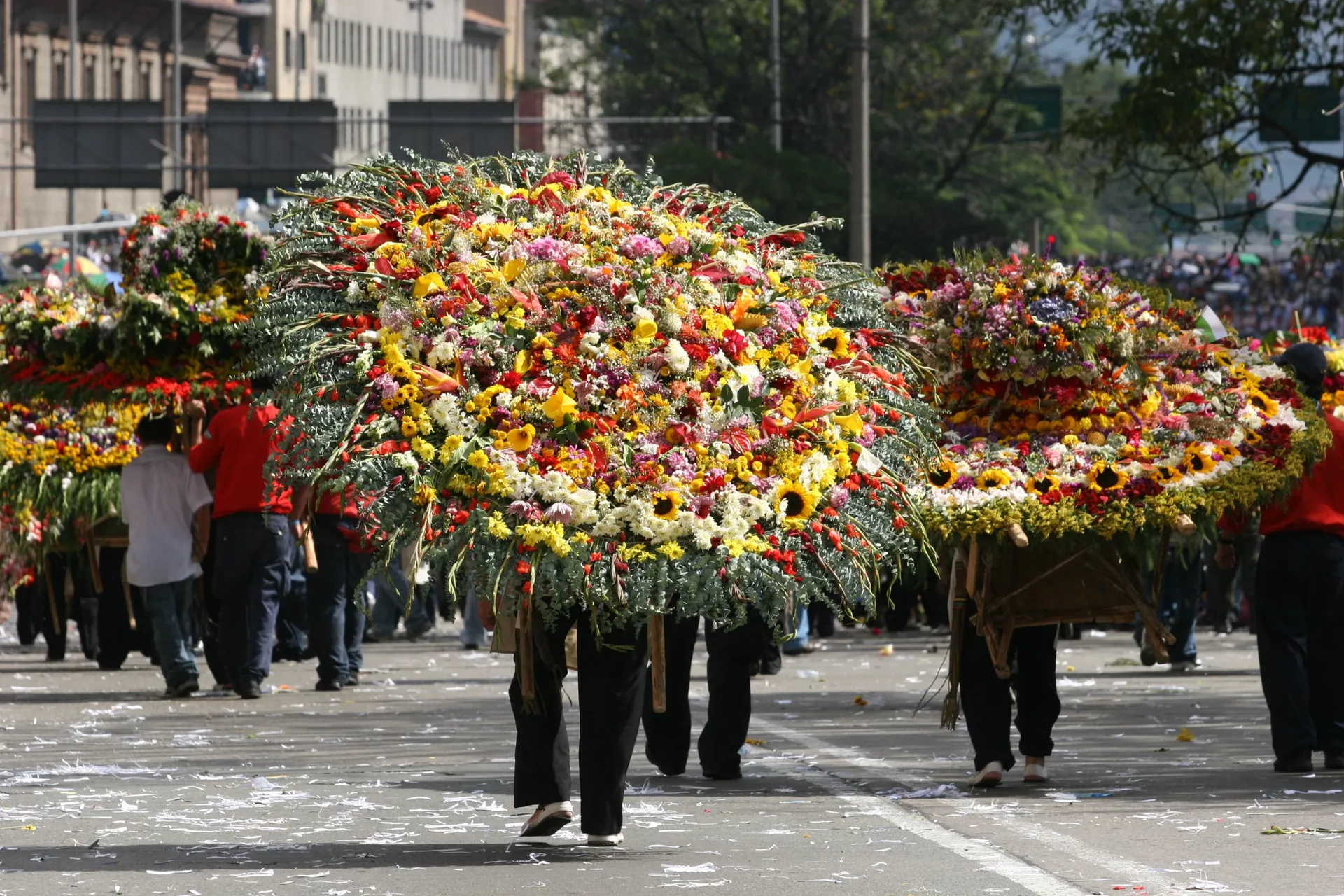
For ten days at the start of August, Medellín stops being a business city and becomes a flower. Balconies fill with orchids, whole avenues close for parades, and hillsides of blooms move through the streets on the backs of farmers. This is the Feria de las Flores, the most important festival on the paisa calendar and the moment the region shows off the tradition it is proudest of. If you are deciding whether to build a trip around it, or you simply happen to be in Medellín in early August, this guide covers what the Feria is, when the headline events happen in 2026, and how to plan so the crowds work for you rather than against you.
What the Feria Is, and Why It Matters to Paisas
The Feria de las Flores is Medellín’s homage to the flower growers of Santa Elena, the mountain village in the hills above the city, and to the wider culture of Antioquia. It is not a corporate event bolted onto the city; it grew out of a genuine rural tradition and still runs on it. For paisas, the people of this region, the Feria is a point of identity as much as a party, a yearly reminder of the campesino roots behind Medellín’s modern skyline.
At the center of it all are the silleteros. A silleta is a wooden frame worn on the back, and its history is humble: in colonial times these frames carried people across roadless mountains, and later farmers used them to haul flowers and produce down the steep paths from Santa Elena to sell in Medellín. The first flower festival was held in 1957, when a tourism official invited around 40 silleteros to come down from the hills and show their flowers in the city. That small procession has grown into the festival’s grand finale, but the idea has never changed: ordinary farming families carrying the fruit of their land on their own shoulders.
Feria de las Flores 2026 Dates and Headline Events
The 2026 edition, the 69th, runs from Friday, July 31 to Sunday, August 9, opening with an inauguration at the Obelisco. Across those ten days the city programs a large slate of events, many of them free, from neighborhood stages to major parades. Exact venues and times shift year to year, and the city publishes a full official program each July, so confirm the current schedule before you lock in plans. Based on the 2026 program, the events most worth building your days around are:
- Desfile de Chivas y Flores, the parade of brightly painted country buses, on the opening Saturday, August 1.
- Desfile Avenida Primavera on Sunday, August 2.
- Florecer: Orquídeas, Naturaleza y Tradiciones, the orchid and flower exhibition at the Jardín Botánico, running roughly August 4 to 9.
- Festival Nacional de Trova, the improvised-verse singing contest that is a paisa institution, with finals around August 6.
- Desfile de Autos Clásicos y Antiguos, the classic and vintage car parade, on Friday, August 7.
- Desfile de Silleteros, the flower carriers’ parade and the festival’s climax, on the closing Sunday, August 9.
Alongside the big-ticket items run the tablados, free open-air stages set up in neighborhoods and outlying corregimientos across the city, with live music most nights. Plazas de flores, temporary flower markets, pop up in spots like Parques del Río and the Parque de los Deseos through the festival. Concerts, including a large closing-weekend show, round out the program.
The Desfile de Silleteros
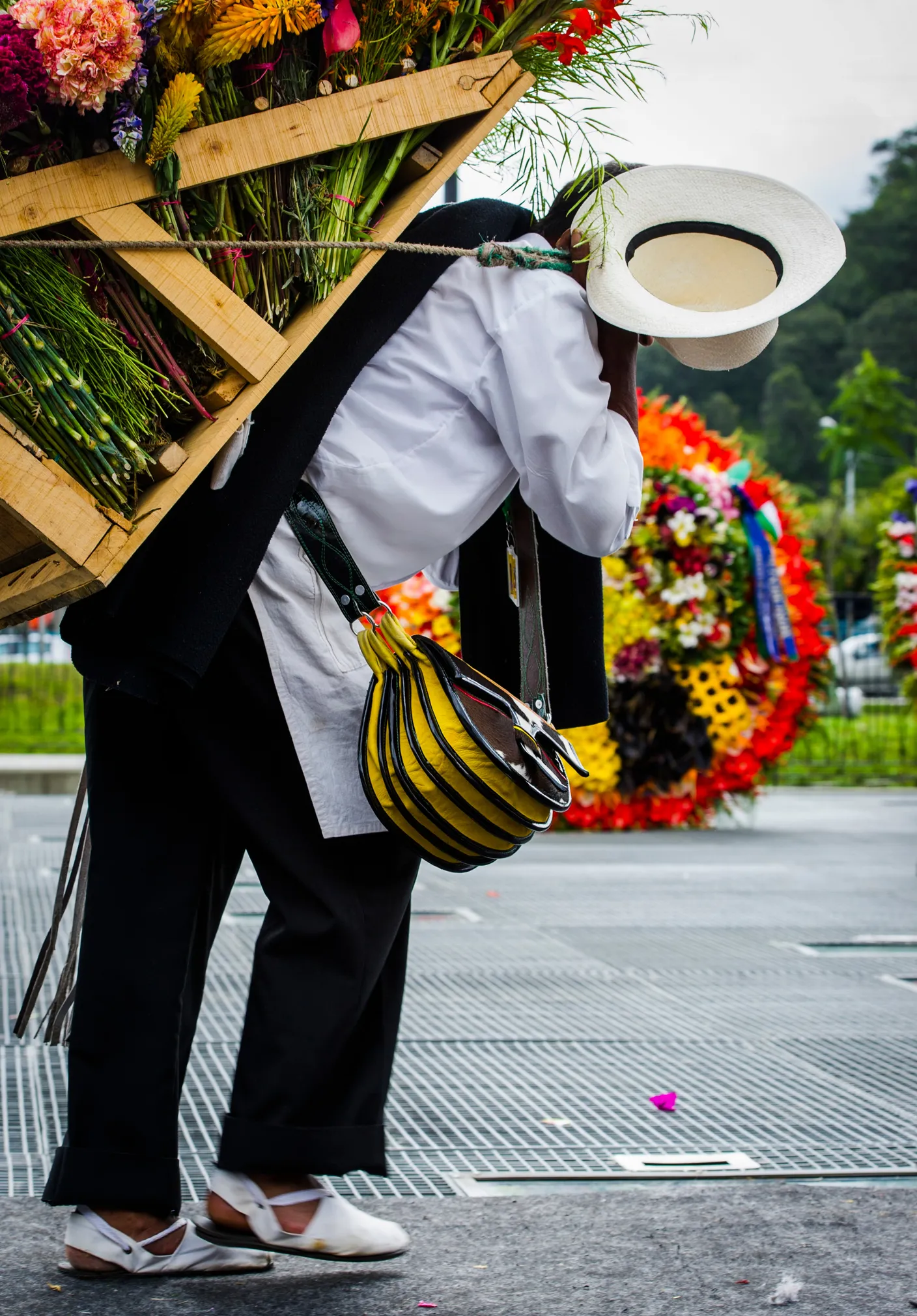
If you see one thing at the Feria, make it this. On the final Sunday, more than 500 silleteros of all ages, from small children to elders who have marched for decades, carry their silletas along a route of roughly two and a half kilometers while the city lines the streets to cheer them. The largest arrangements stand several meters tall, weigh tens of kilograms, and take months to design and assemble from dozens of flower varieties grown on the family farm.
The silletas are judged in categories, including the traditional tightly packed circular design, more elaborate artistic and monumental pieces, and commercial arrangements that spell out messages and logos. Watching an eighty-year-old silletero shoulder a wall of flowers up the avenue, often to some of the loudest applause of the day, is the emotional heart of the whole Feria and the clearest window into why paisas care about it so much.
Two practical notes on viewing. Free standing room is available all along the route, but the good vantage points fill up hours ahead, so arrive early, bring water and sun protection, and be ready for a long wait in the crowd. The city also sells seated grandstand tickets (palcos) along the route, which spare you the scrum but sell out well in advance through official channels. Prices vary year to year, so check the official program for current figures rather than trusting resellers.
Other Signature Events
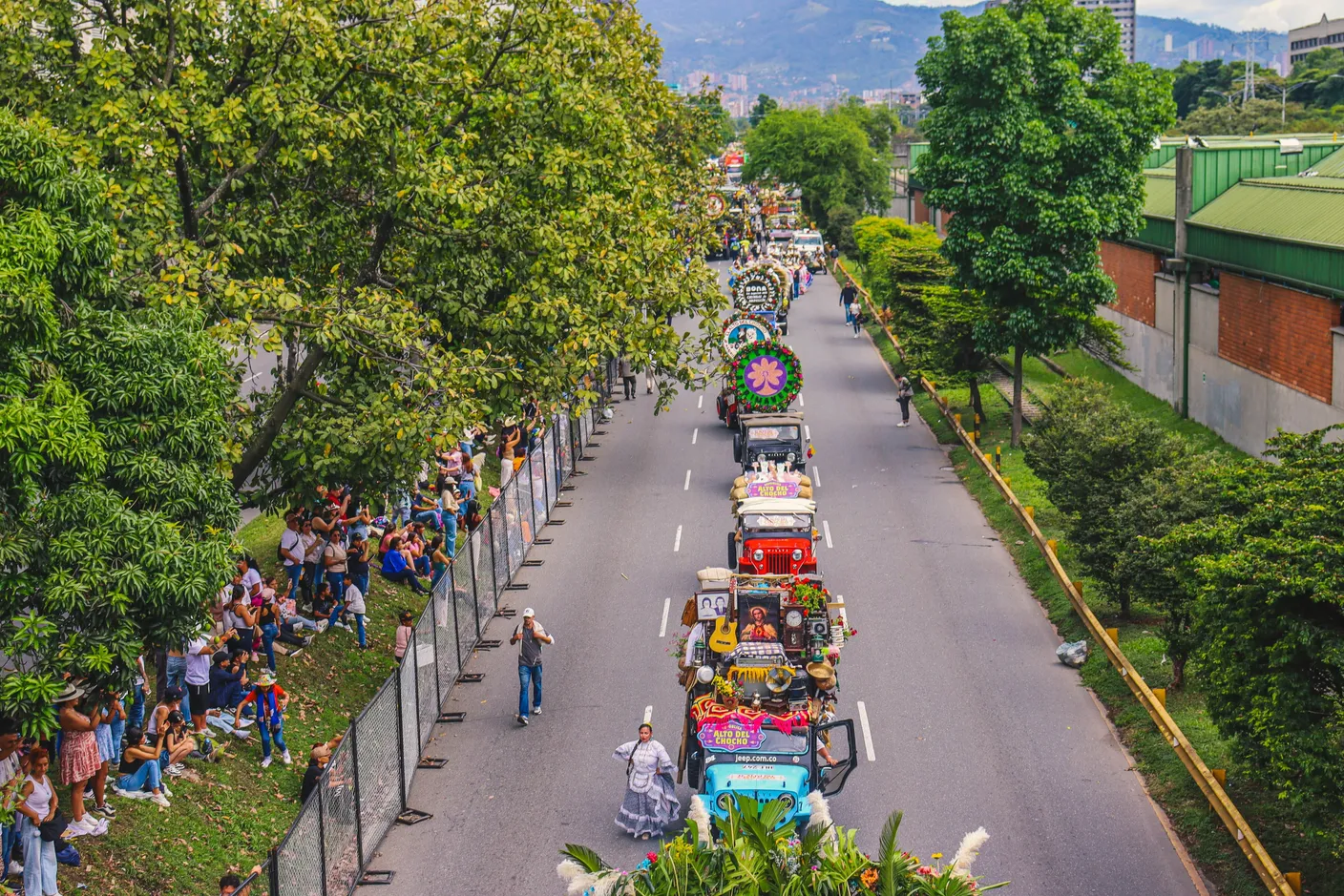
The Feria is far more than one parade. The orchid, bird, and flower exhibition at the Jardín Botánico is a highlight in its own right, filling the gardens with growers’ displays and a serious showing of Colombia’s astonishing orchid diversity. The classic car parade sends hundreds of gleaming vintage and antique vehicles through the streets and draws its own devoted crowds. The Desfile de Chivas y Flores puts the region’s ladder-sided rural buses, the chivas, on colorful display, often paired with live music and aguardiente.
Then there are the tablados, the neighborhood stages that are the festival’s beating heart for locals. These free concerts, spread across the city and its hillside comunas and corregimientos, are where paisa families actually spend their Feria evenings, and they range from tango and bolero to salsa, tropical, and Colombian folk music. The Festival Nacional de Trova, meanwhile, is pure Antioquia: dueling singers improvising sharp, funny rhyming verses on the spot, a tradition that rewards quick wits as much as a good voice.
Visiting Santa Elena
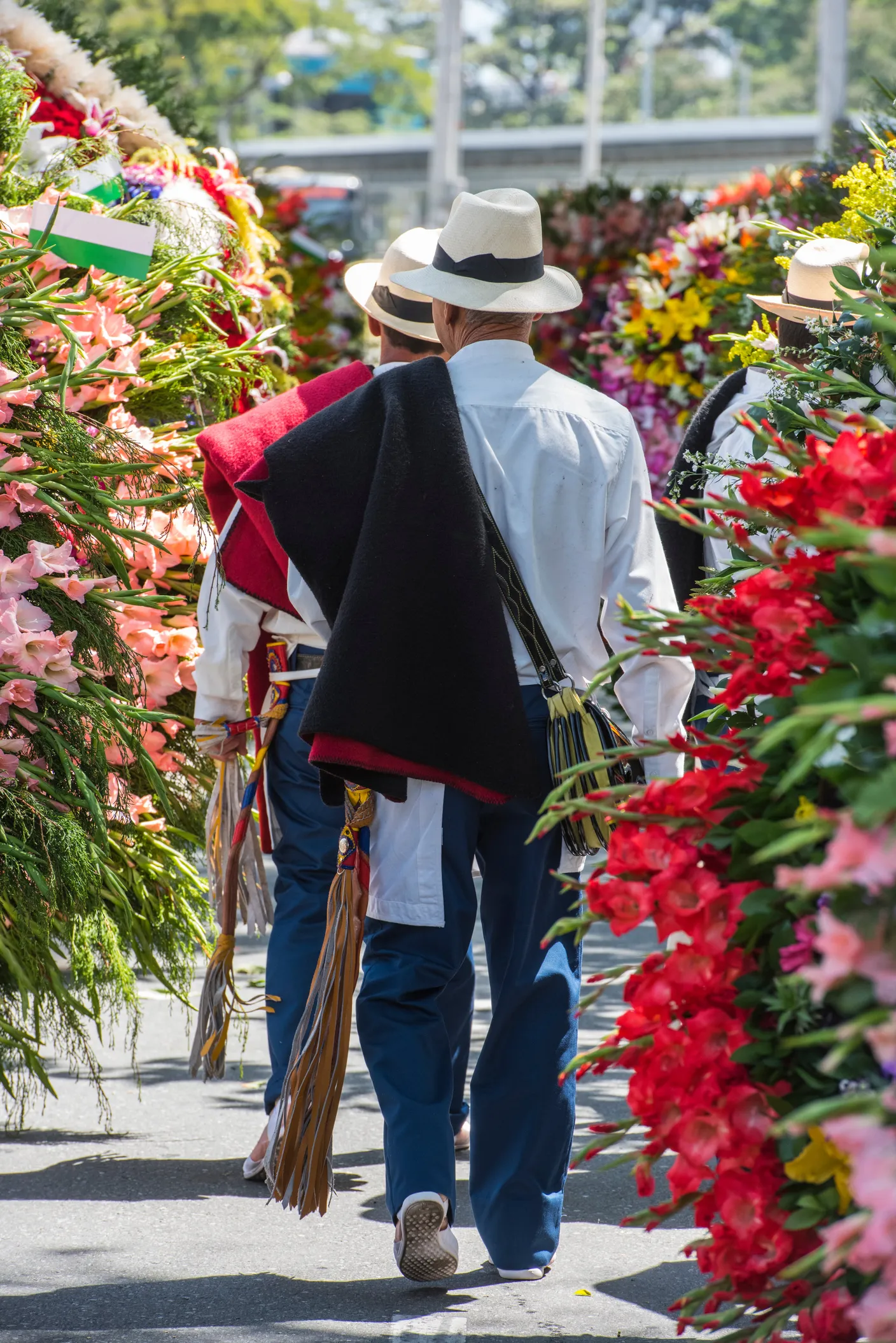
To understand the silletas, go to where they are made. Santa Elena sits in the hills above the city and is the home of the silletero families, many of them working flower farms that have passed the craft down for generations. In the days before the parade, some farms open to visitors, who can watch artisans build the silletas flower by flower, learn about the growing, and often share a meal. It is a quieter, more personal counterpoint to the roar of the parade, and it tends to leave visitors with a much deeper appreciation of what they later see on the avenue.
You can reach Santa Elena by public bus or by hiring a driver, and a number of Medellín operators run guided farm visits during the Feria, especially in the run-up to the closing Sunday. Demand is high in festival week, so if a Santa Elena farm visit matters to you, arrange it early rather than hoping to sort it out on the day.
Practical Planning
When to book. Early August is Medellín’s single busiest stretch, and the Feria coincides with a Colombian long weekend that brings heavy domestic travel on top of international visitors. Hotels near the parade routes and in popular neighborhoods fill and raise their rates weeks or months ahead, and the best-value rooms go first. If you are planning a Feria trip, book accommodation and any grandstand tickets or Santa Elena tours as far in advance as you reasonably can.
Where to stay. The neighborhood you choose shapes how easily you reach the events and how much festival noise you live with. El Poblado and Laureles are the usual visitor bases, each with a different feel and price point, while quieter areas trade convenience for calm. Our guide to where to stay in Medellín breaks down the main neighborhoods, who each suits, and current nightly rates so you can pick a base that fits your Feria plans.
Getting around. During the Feria, road closures for parades and big crowds around venues make driving across the city slow, so lean on the Metro, which stays the fastest and most reliable way to move during the festival, and expect it to be busy on parade days. Plan extra time, know which stations sit near your event, and read our guide on how to get around Medellín for the Metro, Metrocable, Cívica card, and ride-hailing apps.
As with any large event drawing big crowds and cash, keep the usual city habits during the Feria: valuables out of sight, awareness in packed spaces, and registered taxis or ride apps after dark. Our Colombia safety guidelines cover the sensible basics.
Plan a Trip Around It, or Avoid the Crowds?
So should you build a trip around the Feria de las Flores? If you want to see Medellín at its most alive and you care about culture and tradition, yes. There is nothing else quite like the silleteros parade, and the ten days around it show a side of paisa identity that a normal visit never reaches. Time your stay around the closing weekend, when the silleteros, classic cars, and biggest concerts all land, and you will catch the festival at full volume.
The trade-offs are real, though. Rooms cost more and sell out, the city is crowded and loud, and moving around takes patience. If your idea of Medellín is quiet cafes, easy day trips, and space to breathe, early August is the wrong window, and you would be happier visiting almost any other time of year, when the same spring-like weather comes without the crush. And if you are already in town for the Feria but not chasing every parade, you can dip in and out: catch a tablado near where you are staying, spend a morning at the Jardín Botánico exhibition, and skip the sardine-tin vantage points on parade day. For a wider look at how the Feria fits among Colombia’s great celebrations, see our guide to the country’s festivals. However you approach it, the Feria de las Flores is Medellín being unmistakably, joyfully itself.
Sources
- Falta poco para la Feria de las Flores: conozca la programación (El Colombiano)
- Medellín Feria de las Flores 2026: Dates and Guide (The Rio Times)
- Programación Feria de las Flores 2026 (Visitar Medellín)
- Lo que debe saber de la Feria de las Flores 2026 (El Tiempo)
- Feria de las Flores 2026: se conocen las fechas claves (Publimetro Colombia)